

Natural lifting in your 50s and 60s comes down to design and treatment order. Here are the six steps we follow, with a real case of a 65-year-old woman.
Hello from DAYONE Clinic. These days I'm busy with patients as well as filming for YouTube and TV, recording videos for medical conferences and preparing lectures on fillers and thread lifts. I know it sounds like an excuse every time, but I keep meaning to post more often and never quite manage it.
Covering different topics across YouTube, Instagram, TikTok and Naver Blog takes more energy than I have, so today I'm sharing something I recently posted on YouTube.
Natural-Looking Lifting for Your 50s and 60s
We see a lot of patients in their 50s and 60s at DAYONE Clinic near Gangnam Station, and they're also the age group most satisfied with their results. I think that's because what we do best is lifting that doesn't change your look or make it obvious you've had work done. Looking naturally younger without it showing takes real know-how.
It starts with design, and the most important thing is designing so that no shadows form. It sounds easy, but design is actually the hardest part, and the practitioner's (doctor's) eye matters a great deal. Getting the order of treatments right is just as important.
In What Order Should Treatments Be Done?
This is the order I always walk patients through at consultation:
1. If there are wrinkles, smooth them first — fine lines: Botox; deep wrinkles: regenerative filler
2. If something needs slimming, slim it — fat-dissolving injections (contour injections, sculpting injections, V-Fit)
3. If something needs volume, fill it — dermal fillers, Dojagi (porcelain skin) injections
4. If something needs lifting, lift it — ultrasound lifting (Ultherapy, Shurink) or thread lifts (Anchor Cog, Blue Rose, Silhouette Soft and others)
5. If there's pigmentation, clear it with lasers — Pico Toning, MaxG, Ruby, Venus Viva, Secret, Clarity (the devices we use)
6. Dermal regeneration (collagen remodeling) — radiofrequency lifting (Tune Face, Thermage), stem cells
The order isn't set in stone, but steps 1–4 improve your facial contours, and steps 5–6 then improve your skin. And once steps 5–6 improve the skin, firmness improves with it, so your contours can look even better.
There's no need to do everything at once. This is cosmetic treatment, not an illness, so it's best to take it one step at a time, at a pace you're comfortable with, with another consultation at each stage. Following this order means you start with the treatments that cost less and work well, so you keep costs down and get natural results that don't change how you look.
A Real Case: A 65-Year-Old Woman
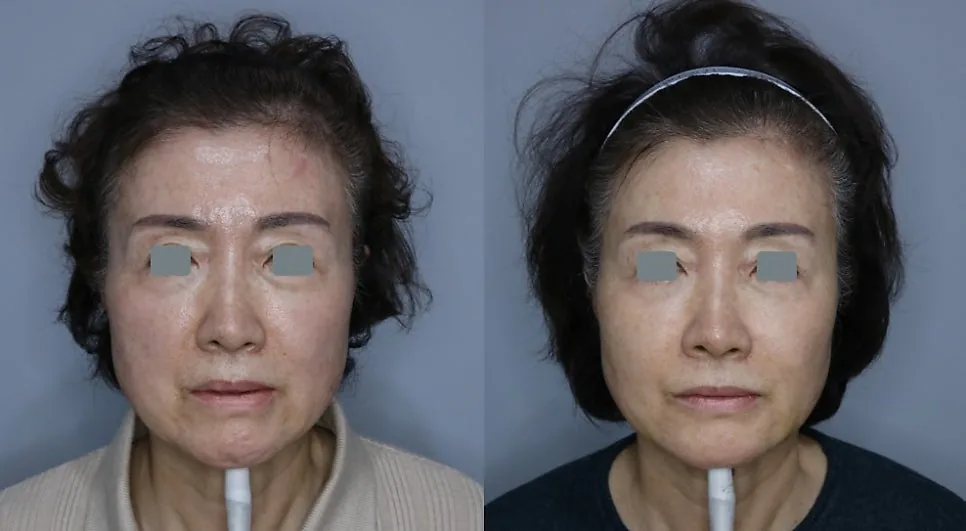
This is a real example from a 65-year-old woman. The photo on the left below was taken on November 20, 2021, and the one on the right on January 15, 2022. Neither has been retouched, of course.
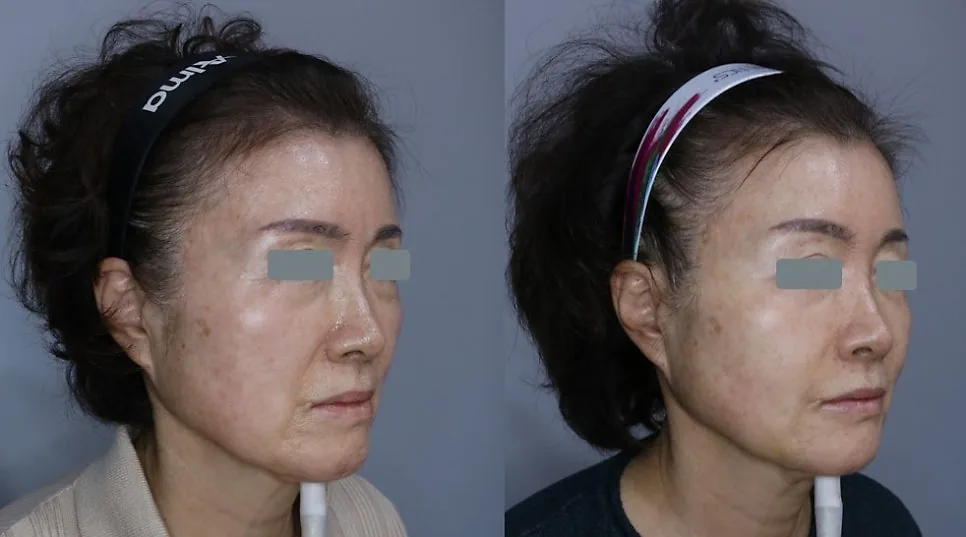
She had steps 1, 2, 3 and 4 from the list above, plus a stem cell treatment, and she's now on step 5, pigmentation laser. She looks younger without her face changing, which is why she's so happy with the result. With the pigmentation laser still to come, her face should look even better with time.
What Happens If You Skip the Order?
If you skip the order and treat whatever catches your eye, you may end up with results you don't like. For example, if there's a lot that needs slimming but you fill hollow areas first, your face can end up looking even fuller. And if Botox alone would smooth out fine lines, going straight to ultrasound lifting for them isn't good value for money.
That's why, as a patient, it pays to go step by step: start with the best-value treatments and work your way up in the order above.
The Bottom Line
Most important of all, this order can differ from person to person. Talk it through with your doctor and settle on the order of your treatments from the start, before you begin.
This article is general information about the treatment and does not replace an individual diagnosis or treatment plan. Results and their duration vary from person to person.
Wondering what would suit you?
Whether a treatment suits you, and how to plan it, is best decided with a doctor.