

Looking tired in your 30s often comes from small shifts in firmness, volume and shadows, not sagging. The right laser lifting depends on your face, not your age.
Hello from DAYONE Clinic. Maybe your face looked unfamiliar on a video call, or a recent photo didn't quite look like you. It's hard to call it sagging, yet people have started telling you that you look tired, or that something about you seems different. Straight on in the mirror you look fine, but your profile, your smile or your face in photos can look a little off.
It's one of the concerns we hear most often from patients in their 30s. Nothing has changed dramatically, but something clearly has, and that makes it harder to know whether you need treatment at all, and if so, where to start. Here's why these changes happen in your 30s and how we decide on laser lifting.
Not Sagging, So Why Do You Look Tired?
Your 30s are less about visible sagging and more about small changes that add up. Skin loses a little of its firmness, volume in the cheeks shifts slightly downward, and shadows under the eyes and around the mouth start to stand out. Add changes in skin texture and evenness of tone, and your whole face reads differently.
The key is that your overall look comes from the balance of the whole face, not a single feature. Each change seems minor on its own, but when the corners of the mouth, the height of the cheeks and the shadows under the eyes all shift a little at once, you can look worn out or less approachable. That's why you can't point to one spot in the mirror, yet everything looks different.
Why Does Skin Lose Firmness in Your 30s?
Collagen and elastin in the skin are known to decline gradually from the mid-20s. In your 30s, though, life tends to make that decline more noticeable. Stretches of short sleep, built-up stress, regular sun exposure, weight going up and down, and the changes that come with having a baby and caring for young children can all affect your skin.
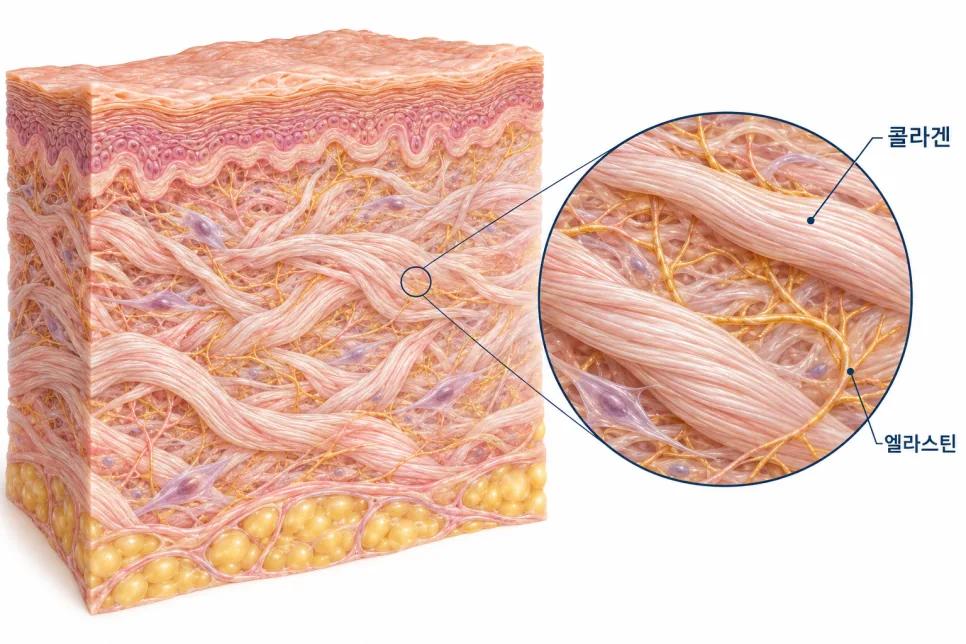
Some people find that after losing and regaining weight a few times, their skin hasn't kept up and no longer feels as firm. Expressions you make over and over when you talk and smile can also settle into lines or shadows in certain areas. Because the causes and the areas differ from person to person, even within the same decade, age alone can't tell you which way to go.
What Does Laser Lifting Actually Do?
In Korea, “laser lifting” is the umbrella term for treatments that deliver energy into the skin to stimulate collagen renewal, with firmness and texture improving gradually over time. They fall into two groups depending on how the energy is generated, radiofrequency and ultrasound, and devices such as Thermage and Ultherapy belong here. Even within one group, the depth the energy reaches and the way it's delivered differ. So the first question isn't which device is the most famous. It's which layer and which area of your face needs what kind of energy.
In your 30s, treatment is usually less about lifting areas that have already dropped and more about refining the firmness you have now and keeping future changes gradual. Rather than a sudden difference right after treatment, the aim is change that builds as your skin renews itself over time.
First Time Trying Lifting? What to Know
Ultherapy is one of the first names people think of when they're considering laser lifting for the first time. When it's all new, the questions come at once: how the treatment works, how uncomfortable it is, when you'll start to notice a difference, and which areas of your face actually need it.
Ultherapy delivers ultrasound energy to deeper layers beneath the skin, so how the areas, depth and energy are adjusted matters. In your 30s especially, the rule is to treat the areas that need it, as much as they need, rather than doing more. Results also tend to appear gradually rather than right after treatment, so it's important to keep an eye on your progress together with your doctor.
How Much Treatment Is Right in Your 30s?
In your 30s, more energy doesn't automatically mean better results. Your skin and facial structure are still fairly stable, so energy beyond what you need can leave the cheeks looking deflated or the result looking unnatural. That calls for careful judgment, especially if your skin is thin or you don't have much fullness in your cheeks.
So in your 30s, deciding which areas need how much matters more than how intense the treatment is. Even at the same age, one person notices the cheeks losing firmness first, another is bothered by the jawline, and another mostly needs smoother texture and overall firmness. Each calls for a different approach. If the lower face is the concern, such as a double chin or the area around the nasolabial folds, we may also look at targeted options like ONDA Lifting, which uses microwave energy.
Early 30s vs. Late 30s: What's the Difference?
In your early 30s, subtle changes in firmness, skin texture and overall condition usually show up before any sagging. At this stage it often makes sense to maintain what you have and look after your skin's condition, and sometimes healthy habits and keeping track of your skin are enough.
By your late 30s, changes around the cheeks, mouth and jawline become easier to see, and more people feel their expression in photos isn't what it used to be. At that point we first find which area is affecting your overall look the most and plan around it. Age isn't the only factor, of course. Two people of the same age can be in very different places depending on weight changes and lifestyle.
What Do Our Doctors Check at Your Consultation?
At DAYONE Clinic, we don't start a consultation with a treatment already in mind. First we look at your skin's current firmness and thickness, which areas change when your face moves, the overall balance of your face from the front and in profile, and the look you're hoping for. We watch your face in motion, not just at rest, because changes in your 30s often show up more clearly in your expressions.
What you want and what suits your face aren't always the same. Even if you'd like a more defined look, how well it suits you depends on your facial structure, so finding the balance between the two is the heart of the consultation. If the way you look on camera or on video calls bothers you, tell us which moments feel most uncomfortable. It helps us decide on the right direction.
Do You Need Treatment Right Now?

Being in your 30s doesn't mean everyone should start lifting now. For some people, good skincare and a look at daily habits are enough; for others, starting now is a natural way to keep changes gradual. Rather than deciding because your friends are doing it or because you've reached a certain age, decide once your skin and face have been properly assessed.
That's why we start by looking at whether you need treatment at all, and if you don't, we tell you so. That's an important part of the process. The goal is to find what you need, not to add more.
What Happens After Treatment?
Laser lifting isn't a one-and-done treatment so much as an ongoing process of watching how your skin responds. Checking your skin and progress afterward, and following up with touch-ups for specific areas if something still bothers you, helps keep the results natural.
Your skin may be sensitive for a while after treatment, so take extra care with cleansing, moisturizing and sun protection. Sleep and daily habits affect your skin too, so pairing treatment with everyday care, rather than relying on treatment alone, helps the results last longer.
The Bottom Line
Changes in your 30s are subtle, so understanding what's actually happening to your face matters more than picking a type of treatment. The starting point is working out whether a tired look comes from a loss of firmness, changes in specific areas, or something in your daily life to address first.
Looking softer and younger while still looking like yourself doesn't come from trying to look different. It starts with finding what your face needs right now. If your face in the mirror doesn't seem quite the same lately, book a consultation with one of our doctors at DAYONE Clinic near Gangnam Station and find out what kind of change is right for you.
This article is general information about the treatment and does not replace an individual diagnosis or treatment plan. Results and their duration vary from person to person.
Wondering what would suit you?
Whether a treatment suits you, and how to plan it, is best decided with a doctor.