

Nasalis massage and fascia lifting to soften smile lines, and why rapid weight loss undermines facial firmness. What home care can and can’t do, and why filler for structural smile lines should never be overdone.
This article is adapted from an interview on Face Design Lab, DAYONE Clinic’s YouTube channel.
Hello from DAYONE Clinic. Smile line filler suits the structural type, where the area beside the nose is sunken; the sagging and excess-fat types are hard to fix with filler alone and need a different approach. In the previous article, I introduced three moves from the three-minute face yoga for softening smile lines. This time I’ll cover the remaining massage techniques and smile line filler in detail.
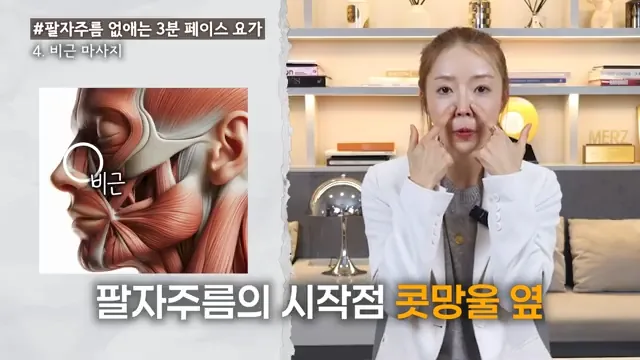
Move 4: Nasalis Massage
The fourth move is a nasalis massage. The nasalis (its alar part, the small muscle beside the nostril) sits right where smile lines take root. Many people focus only on the area around the mouth, but the line actually starts right next to the nostril. It begins as the area beside the nose sinks in.
When you smile or make expressions, the muscle beside the nostril contracts and pulls upward. If this muscle becomes knotted and shortened, a shadow forms beneath it and smile lines look even deeper.
Let’s release the nasalis with your index finger. Press gently on the area and slowly roll it in small circles. Don’t press hard; just do it for about 30 seconds, as if gently soothing a tight muscle. It should feel a little achy, but in a good way.
Move 5: Fascia Lifting
Next, let’s do fascia lifting.
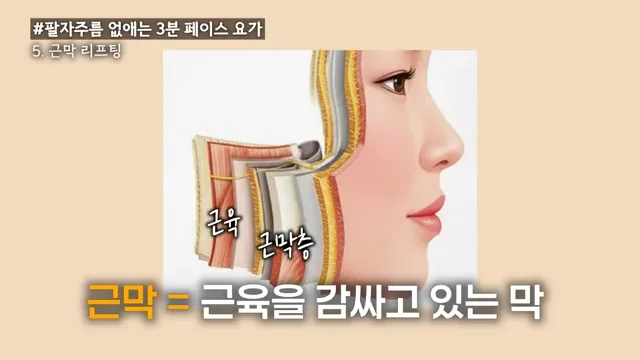
Fascia is a thin, tough membrane that wraps the muscles and firmly supports the skin. The firmer the fascia, the less the skin sags and the better its elasticity. Stimulating and releasing the fascia with massage is like waking up the firmness beneath your face.
It’s very easy, too. Press gently on both temples and lift upward.
Some people ask, “What do the temples have to do with smile lines?” Fascia connects across the whole face like a spider web. So lifting the fascia upward naturally smooths smile lines as well.
Making It a Daily Habit
If you try to set aside dedicated time for this massage, it won’t last. It’s a hassle and easy to forget, so you keep putting it off. It’s better to make it a habit, while relaxing in front of the TV or when it crosses your mind at work. It may seem minor, but small habits add up to a difference in your face five or ten years from now.
A Habit to Avoid: Crash Dieting
Working hard at home care matters, but if you don’t fix the habits that deepen smile lines, it’s like trying to fill a leaky bucket. The one I want to stress most is not losing weight too fast.
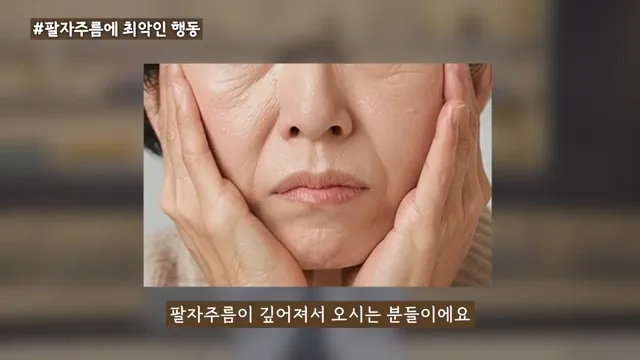
The most unfortunate cases are people who come in after dieting, having lost weight but also a lot of facial fat, with deeper smile lines as a result. Losing weight in a short time raises your stress hormones and doesn’t give the skin enough time to regain its elasticity. As a result, facial fat goes first and the skin suddenly sags.
So always diet slowly, eat enough protein and combine it with strength training to protect your precious facial firmness.
What Home Care Can and Can’t Do
I’m often asked, “Can home care and lifestyle habits alone get rid of lines that are already deep?” It depends on the depth, but honestly, completely erasing very deep lines is impossible.
Home care helps keep lines from deepening and softens fine ones. But it has limits for structural lines with deep grooves, or when advanced aging has caused severe sagging.

In those cases, getting help from a treatment is far more efficient and effective.
Why You Shouldn’t Rush Into Filler
That said, don’t simply assume that filler will fill in the grooves. The solution differs completely depending on your type of smile lines. I’ll go through each type, so check which one applies to you.
Type 1: Structural

The first is the structural type, with a very protruding mouth or a sunken base beside the nose. In these cases, it’s often less a wrinkle than a low area that casts a shadow. So physically filling the sunken area comes first, and the most common way to do that is filler.
There’s one point I always emphasize: smile line filler must never be overdone. With too much, the filler can be pushed upward when you smile, making your face look unnatural or even making the lines look deeper.
So the key, and where a practitioner’s skill really shows, is filling naturally with only the minimum needed, focusing on the deepest grooves. Of course, how long filler lasts and how well it works can vary from person to person depending on skin condition.
Final Thoughts
Remember nasalis massage and fascia lifting, avoiding crash diets, and never overdoing smile line filler. In the next article, I’ll cover treatments for the laxity type and the excess-fat type in detail. If you have any questions, feel free to ask us at DAYONE Clinic near Gangnam Station.
This article is general information about the treatment and does not replace an individual diagnosis or treatment plan. Results and their duration vary from person to person.
Wondering what would suit you?
Whether a treatment suits you, and how to plan it, is best decided with a doctor.