

Smile lines, marionette lines, and jowls often show up together as the lower face gradually descends, so rather than simply filling the creases, it’s important to first look at where the sagging is, how much elasticity remains, and what’s happening with volume. Here’s what to consider before a thread lift, and how DAYONE Clinic approaches care from the first consultation through touch-ups and maintenance.

Hello from DAYONE Clinic. Smile lines that used to appear only when you smiled are now visible even when your face is at rest, and marionette lines have started running down from the corners of your mouth. Along the jawline, things have begun to sag into what feels like jowls, and your expression looks heavier and more tired than it used to. We hear this in consultations all the time.
Many people also tell us their weight hasn’t changed, yet the lower half of their face looks different, and they have no idea where to start. Search for dermatology clinics that offer thread lifts and you’ll find no shortage of treatment names—but figuring out which one actually suits your face is another matter. Today’s post is for anyone concerned about smile lines and jowls.
Why do the mouth and jawline seem to change first?
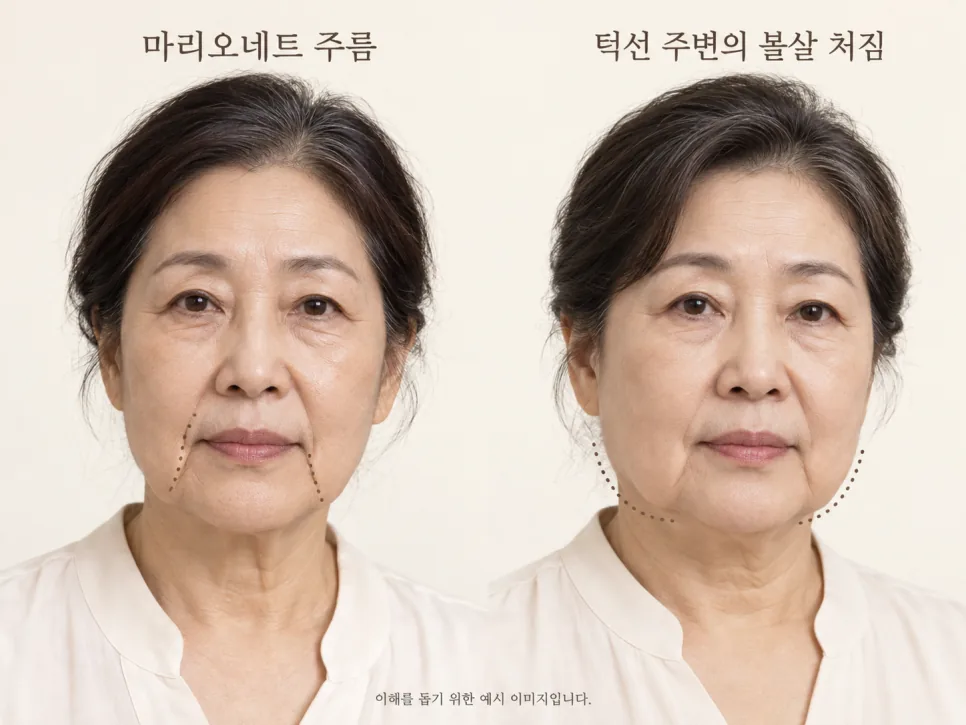
Smile lines (nasolabial folds), marionette lines, and jowls go by different names, but they’re often connected. As we age, the collagen and elastin that keep skin firm decline, and the support structures that hold up the cheek fat and other facial tissue gradually loosen.
As that happens, volume that once sat in the cheeks shifts downward and deepens the smile lines, while sagging tissue collects below the corners of the mouth and along the jawline, which can lead to marionette lines and jowls. In other words, it’s less a wrinkle problem in itself and more a sign of the whole lower face gradually descending.
Will filling the lines solve it?
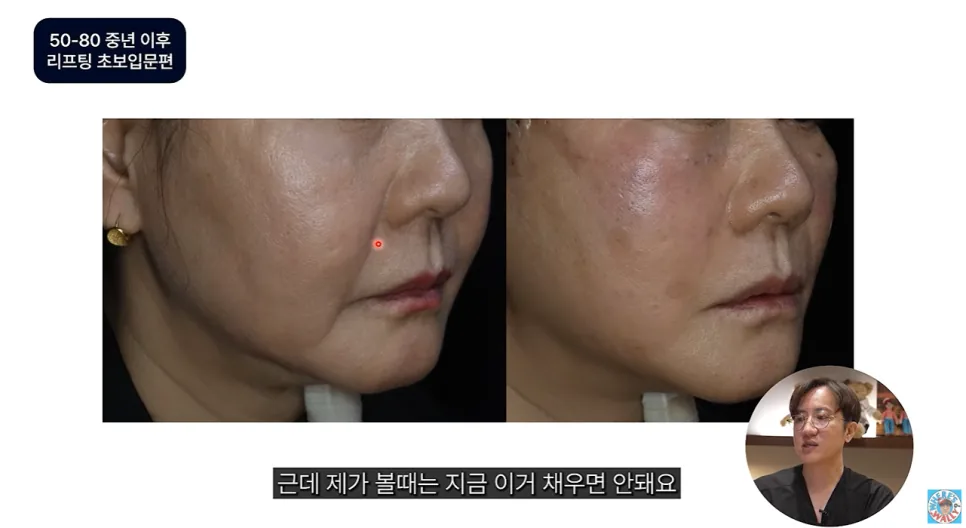
Filling the hollows on its own may not be the answer. If sagging has progressed as well, filling only the creases can make the face look heavier or make the area around the mouth stand out unnaturally. On the other hand, if there isn’t much sagging, an aggressive lifting approach can leave your expressions looking stiff.
Even with similar-looking smile lines, volume loss may be the main issue for one person, reduced skin elasticity for another, and sagging tissue for someone else—so the approach can differ. To learn why you shouldn’t rush to fill the lines right away, check out Dr. Wally on DAYONE Clinic’s official YouTube channel.
What do our physicians look at first?
At DAYONE Clinic, we don’t start by picking a treatment. We start by taking a careful look at your face as it is now. We assess how much skin elasticity remains, whether the sagging began in the cheeks, around the mouth, or along the jawline, how deep the creases are, and how much volume loss is contributing. We also talk through the overall balance of your face, your everyday expressions, and how much change you’re hoping for.
This step matters because the change you want and the change that suits your face aren’t always the same. That’s why our approach at DAYONE Clinic is guided by one idea: “Still your face—just softer and younger-looking.” Rather than simply making you look younger, we focus first on refining the mouth area and jawline naturally, without taking away from the look that’s already yours.
When might a thread lift be an option?
A thread lift is one approach to consider for supporting sagging tissue and refining facial contours. It can be an option when smile lines and jowls have developed together and sagging in the lower face is noticeable. That said, a thread lift isn’t done the same way for everyone—the technique and the area treated can vary depending on where the sagging is, how pronounced it is, and your skin’s thickness and elasticity.
In some cases, a thread lift alone isn’t enough, and we may also consider filler, a skin booster, or laser lifting where needed. On the other hand, if sagging is mild, a simpler approach may be the better fit. What matters isn’t how many treatments you have or how intense they are, but finding what you actually need right now.
If you’re wondering whether smile lines, marionette lines, and lines around the mouth can still be treated in your 70s, we’ve covered that in a video as well. Dr. Wally’s videos on DAYONE Clinic’s official YouTube channel explain how, even later in life, a careful assessment can point to options.
What do we check at a touch-up visit?
We see treatment less as the finish line and more as the start of tracking how your face changes. Right after a procedure, swelling and temporary tightness make it hard to judge the final result, so once everything has settled, we take another look at the mouth area and jawline, and at how things look and feel as your face moves.
If needed, we follow up with a touch-up to address anything that still falls short, and we talk through a maintenance plan to help the results last. That’s why we aim for care that flows as one continuous process—from your first consultation through treatment, touch-ups, and ongoing maintenance.
The bottom line

If you’re considering a clinic for a thread lift, we suggest checking whether they take the time to assess your face first, rather than focusing on which treatments are best known. Smile lines and jowls may look similar from person to person, but the causes and how far they’ve progressed vary, so the first step is a consultation that pins down where you are now and sets a direction that fits you. Feel free to talk with our physicians at DAYONE Clinic near Gangnam Station about what your face needs now—and what kind of change will suit it.







This article is general information about the treatment and does not replace an individual diagnosis or treatment plan. Results and their duration vary from person to person.
Wondering what would suit you?
Whether a treatment suits you, and how to plan it, is best decided with a doctor.