

A drooping forehead pulls the eyelids down and makes eyes look smaller. I compare forehead lift options and show my results the day of and after Tune Face.
It's been a while since I've shared one of my self-treatment reviews, so today I'm combining a review with an explanation. At some point my eyes started to look smaller and my double eyelid crease disappeared into my lid, which really bothered me. So recently I had Tune Face on my forehead and eyelids at DAYONE Clinic near Gangnam Station.
Why Treat the Forehead When Your Eyes Look Smaller?
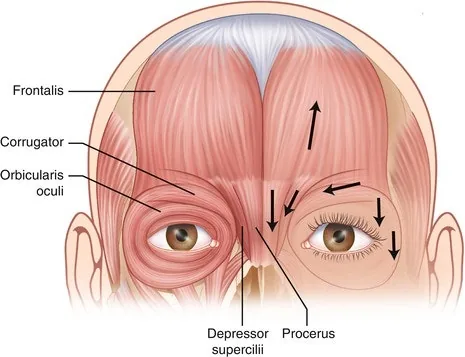
The reason is anatomy. As the illustration above shows, the forehead and eye area are all connected. The forehead muscle, fascia and skin sit vertically on the face, so with age gravity pulls them all straight down. (That's true of the whole face, not just the forehead and eyelids.)
As you can see in the illustration, when the forehead drops, the eyelids drop with it and the eyes look smaller. So if your eyes look bigger when you lift your forehead with your hand, you'll likely see a big difference from a forehead lift.
What Are the Options for a Forehead Lift?
Surgical options include a brow lift and methods using Endotine and similar devices. Non-surgical options include:
Ultrasound lifting (Ultherapy, etc.)
Radiofrequency lifting (Tune Face, etc.)
Thread lift
AirJet lifting
The third option, the thread lift, tends to be less effective on the forehead than on other areas, because the threads have to pull in the "exact opposite direction" of gravity. So today I'll leave the thread lift out and cover the other treatments.
Ultrasound lifting often works well on the forehead. Ultherapy was actually FDA-cleared for brow lifting, and when it's used well on the forehead, it lifts the forehead and raises the brows. But the forehead is one of the most curved parts of the face, so Ultherapy can easily leave tip marks there, known as welts.
Treatment on the forehead also stings quite a bit, and most people getting Ultherapy want it mainly for the jawline, so few people have Ultherapy for a forehead lift. (Treating the forehead as well calls for 600–800 lines, but because of cost, many people only get 300–400 lines focused on the jawline and double chin.)
For curved areas, if you want ultrasound lifting without tip marks, we often use Liftera, a pen-type Korean ultrasound device (or the Eye Shurink tip). That said, in my personal view Ultherapy works far better than Liftera or Shurink. Among ultrasound lifting devices, Ultherapy clearly gives the best results! (This is my personal opinion, but I doubt there's a doctor out there who thinks a Korean ultrasound device is better than Ultherapy.)
Tune Face and the Periorbital Handpiece
Anyway, as much as I love Ultherapy, it's too painful to do on myself, so I decided to use Tune Face for my forehead lift. As you may know, Tune Face is a radiofrequency lifting device, and depending on how it's used, it can do a lot of different things. As I've mentioned many times, radiofrequency lifting isn't just about delivering heat. It works best when the right amount of energy is delivered with careful attention to skin depth, delivery time and so on.
I know a lot of places now offer Tune Face at a low price, but be careful: a low price often means less energy is delivered, which makes it likely the treatment won't work. And although Tune Face is said to have few side effects, delivering a lot of energy effectively means you must be treated by an experienced doctor, because there's a risk of burns.
For the forehead and around the eyelids, we mainly use a handpiece called the Tune Periorbital.
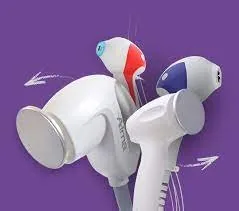
It's the red handpiece in this photo.
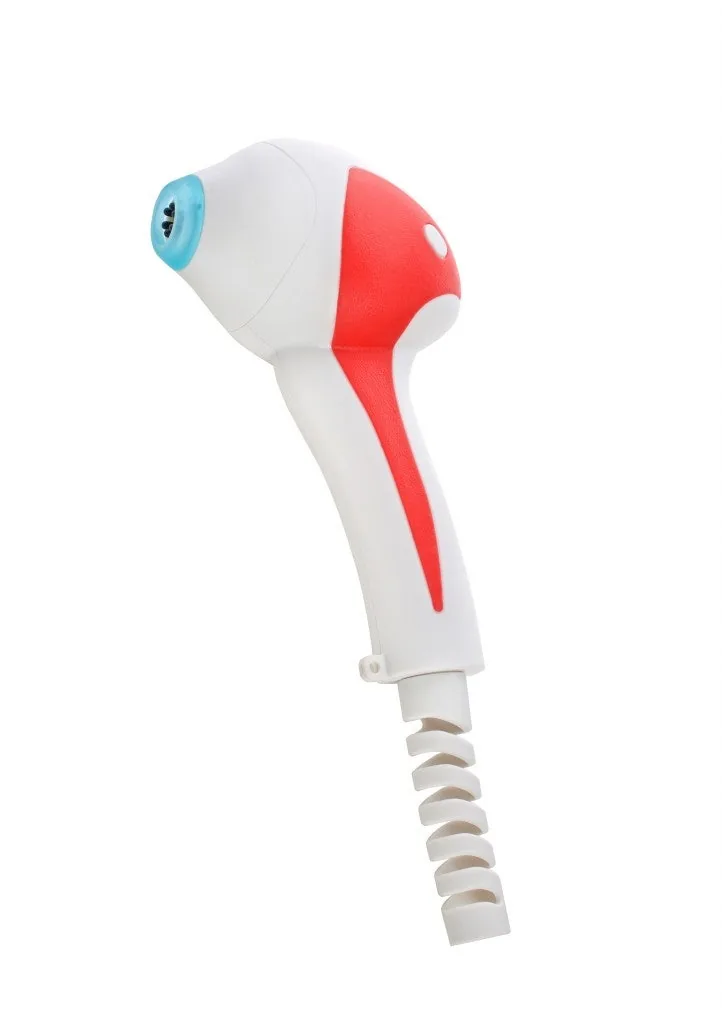
The tip that delivers the radiofrequency energy is fairly small, and a smaller tip usually means shallower penetration. The eyelids and forehead have the thinnest skin on the body, so I prefer this red handpiece for them. There's also a separate handpiece called Tune Eye, but for Asian skin thickness, I think the red Tune Periorbital is the right fit.
The Day of Treatment and the Day After
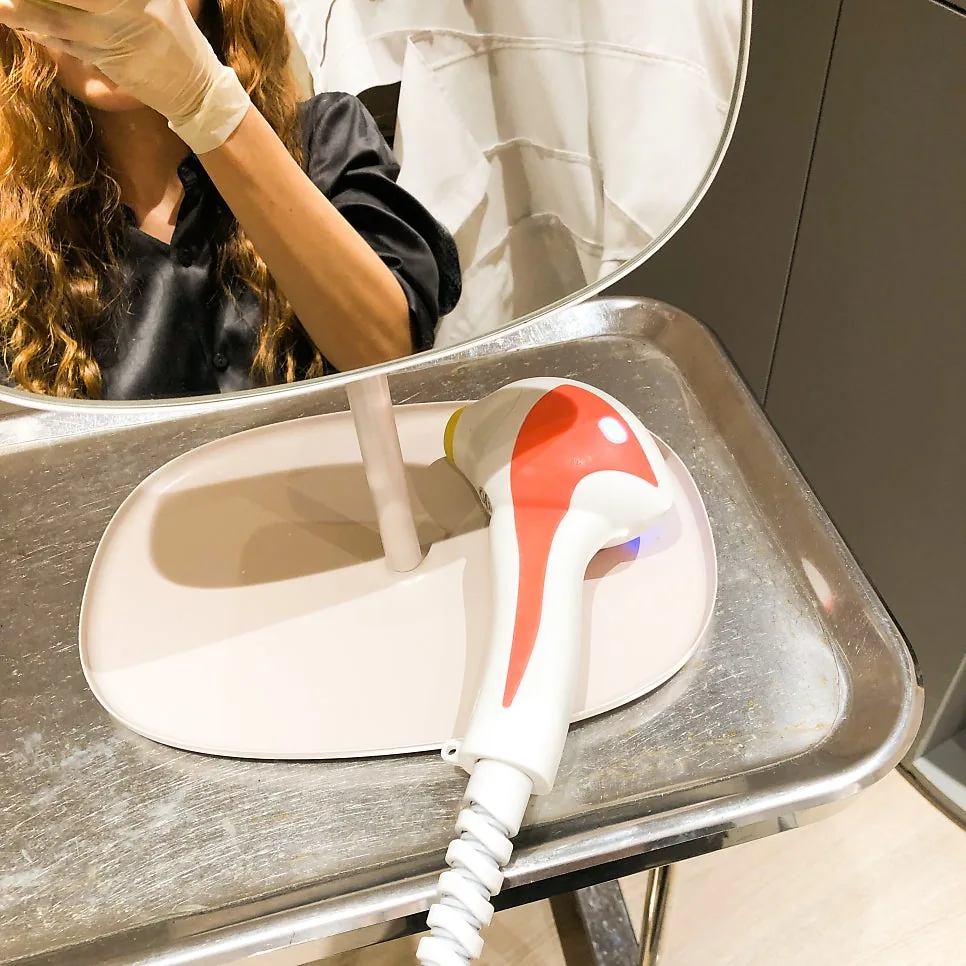
I spent an hour treating myself like this. Tune Face uses suction to draw the skin up while it delivers radiofrequency energy, so the suction can leave red marks, like cupping marks, for two to three days. For some people, the redness lasts about a week.
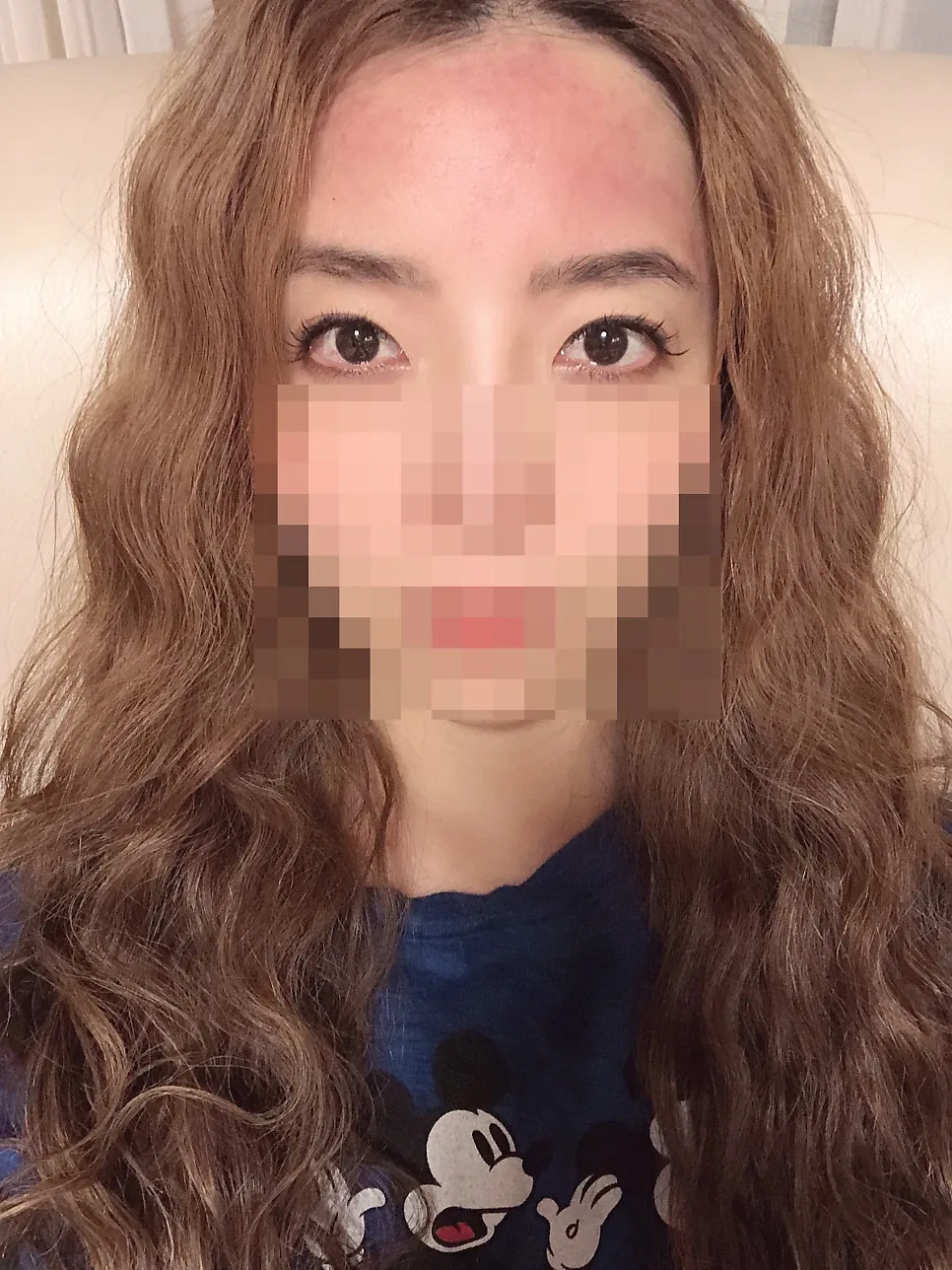
This is the day of treatment. I spent about an hour on just my forehead and eyelids, and you can see how red my forehead got. My eyes also look more open.
Lately my double eyelid crease had disappeared so completely that I looked like I had monolids, but opening my eyes feels noticeably easier now, and my small but precious crease is starting to peek through again. I have ptosis, so I've always used my forehead muscle to open my eyes, and since Tune Face it's clearly easier to open the inner part of my eyes.
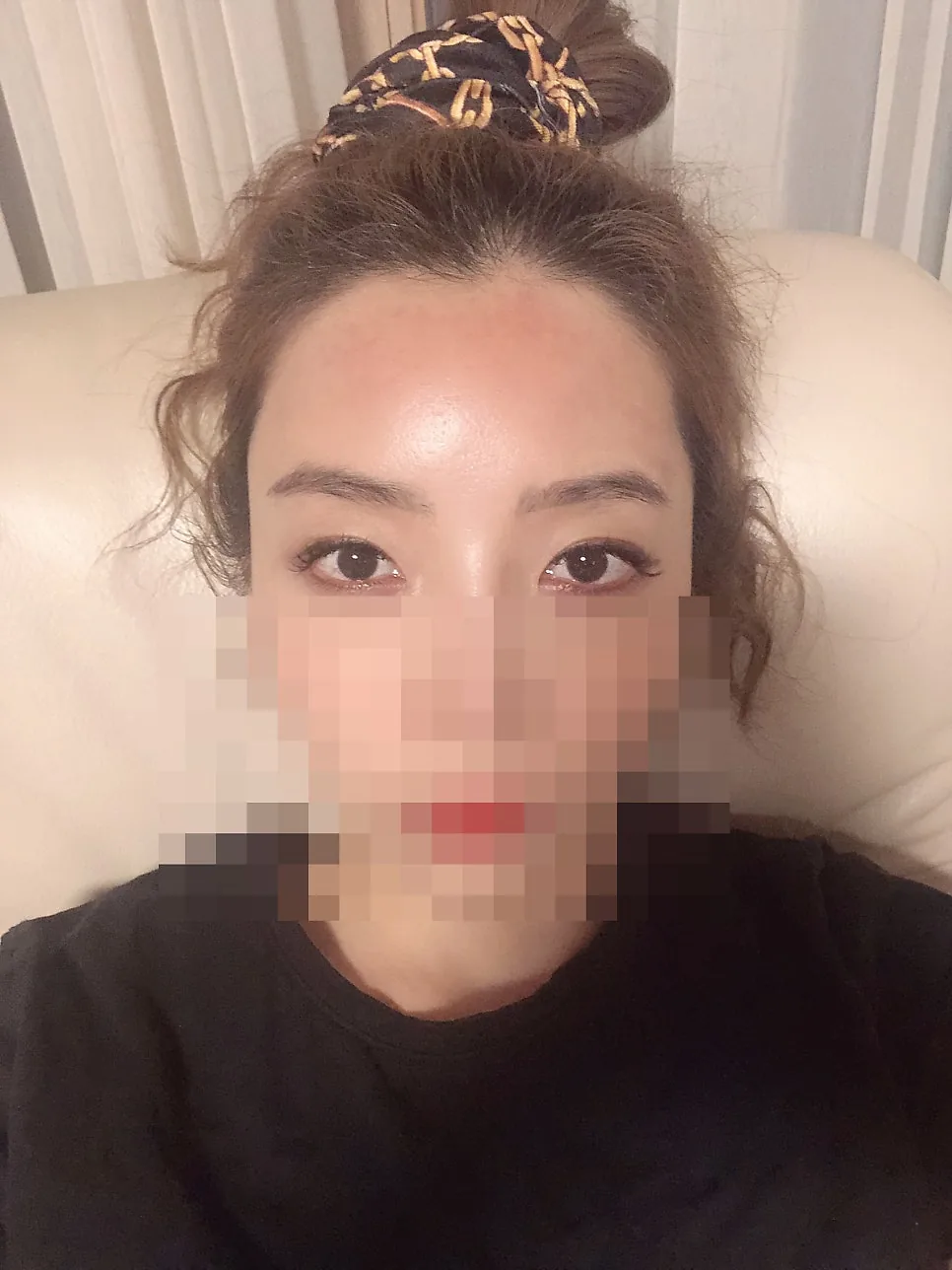
This is the day after. A little swelling gave my forehead a slightly fuller, rounder look. Collagen production in the forehead skin is boosted, so the skin there gets a bit firmer. You may not see much change in eye size in the photos, but my eyes definitely feel more comfortable and open more easily!
The Bottom Line
I'm very happy with my Tune Face forehead and eyelid treatment so far. Adding AirJet as well would be ideal. If your eyelids have started to droop, surgery scares you, and you'd like brighter, more open eyes with a non-surgical treatment, I recommend Tune Face (and pairing it with Ultherapy and AirJet would make it even better). That's my self-treatment review, along with what Tune Face can do as a forehead and brow lift.
This article is general information about the treatment and does not replace an individual diagnosis or treatment plan. Results and their duration vary from person to person.
Wondering what would suit you?
Whether a treatment suits you, and how to plan it, is best decided with a doctor.