

Why keeping your weight steady and blocking UV matter for jowls, and how far home care can really go. We also explain filler anchoring, which builds support to smooth out sagging, and Sculptra, which helps your skin make its own collagen.

This post is adapted from an interview on DAYONE Clinic's YouTube channel, Face Design Lab.
Hello from DAYONE Clinic. In the last post, I covered why jowls form and how to care for them at home with retinol. This time, I'll explain why keeping a healthy weight matters and how filler anchoring along the jawline works.
Home Care 2: Keeping a Healthy Weight
The second way to care for jowls is to keep your weight in a healthy range. Gaining weight suddenly is bad, and so is losing it fast. It's something a surprising number of people overlook, yet it plays a big part in keeping jowls under control.
First, when you put on weight, the fat pads in your cheeks get heavier. Fat that can't support the extra weight is pulled down by gravity and drops faster.
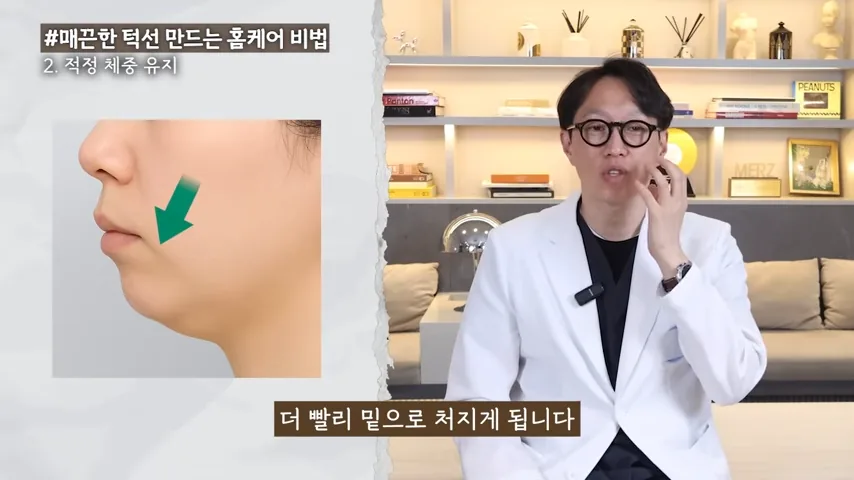
But losing a lot of weight in a short time is no better. It often leaves the face suddenly loose. The fat underneath shrinks quickly, but the skin on top has no time to shrink at the same pace, so it wrinkles and hangs like a deflated balloon. Frequent weight swings also take a heavy toll on skin elasticity.
Home Care 3: Blocking UV
The third and last is protecting your skin from UV. You might be thinking, “Doctor, everyone already tells us to wear sunscreen.” It's that important, though, so I have to say it again.
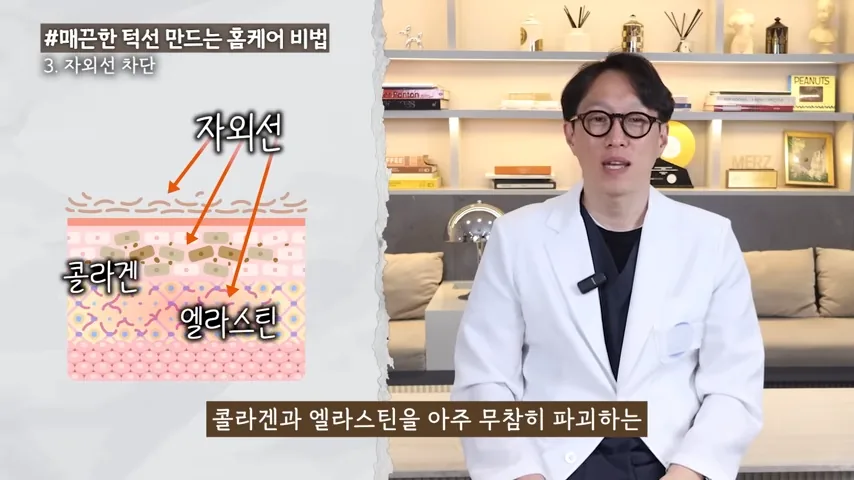
UV is the single biggest cause of serious damage to collagen and elastin, the fibers that keep skin firm. Once that firmness breaks down, sagging is the natural result.
So if you want to prevent jowls, you need to keep up the small habits one by one. If you skip home care and expect treatments to fix everything, costs go up and the results are less likely to match what you hoped for.
What Home Care Can and Can't Do
Some people ask, “So can home care alone get rid of jowls?” To be honest, once jowls have set in, home care alone isn't enough. It's very helpful for slowing aging and keeping your skin where it is now, but skincare can't physically lift tissue that has already dropped.

At that stage, getting a treatment rather than spending money on expensive creams saves time and brings you closer to the result you want. There are four main treatments.
Treatment 1: Filler Anchoring
The first is filler. You may be wondering, “My problem is extra, saggy fullness, so why filler?” When we correct jowls, though, filler is used in a very deliberate way. We place it below the cheekbones, at the back end of the jawline, and in front of and above the ears. This pulls the loose skin taut toward the ears.

This method is called anchoring. It works by building a strong base of support underneath to smooth out sagging tissue. It's also a treatment where results vary a great deal with the doctor's aesthetic eye.
Filler placed in these jawline areas usually lasts about 12 to 18 months. Everyone's metabolism is different, so it breaks down sooner in some people and lasts longer in others. Because filler fades gradually as it's absorbed, your face won't suddenly look odd one day.
And with genuine hyaluronic acid filler, if you don't like where it sits or a side effect develops, it can be dissolved with an enzyme to return things to how they were. That's one of the big advantages of hyaluronic acid filler.
Treatment 2: Sculptra
The second treatment is Sculptra. Sculptra is also used to restore volume, so, like filler, it can be placed behind the cheekbones or at the back of the jawline to refine jowls.

“Then isn't it the same as filler?” you might ask. Rather than adding volume right away the way filler does, Sculptra is an injectable that prompts your skin to make collagen on its own. It's especially popular with people who dislike the artificial look filler can have, or who hesitate to put foreign substances into their body. Because your own skin makes the collagen, results look natural, and the risk of side effects is relatively low.
The downside is that you won't see a change right away, as you would with filler. Collagen takes time to build, so you'll need to wait at least one to two months. The upside is that volume builds slowly and naturally. Rather than asking “Did you have something done?” people around you are more likely to say “Your skin looks great lately.”
Summary
Remember the importance of keeping a healthy weight and blocking UV, how filler anchoring works, and how Sculptra restores volume naturally. In the next post, I'll cover energy-based lifting, thread lifts and how to check your own condition. If you have any other questions, feel free to contact DAYONE Clinic at Gangnam Station.
This article is general information about the treatment and does not replace an individual diagnosis or treatment plan. Results and their duration vary from person to person.
Wondering what would suit you?
Whether a treatment suits you, and how to plan it, is best decided with a doctor.