

Vertical lines above the upper lip come from overusing the orbicularis oris muscle, aging, and habits like smoking and sun exposure that break down collagen. Small changes, like using straws less and reapplying sunscreen after meals, can slow how fast they deepen.

This post is adapted from an interview on DAYONE Clinic's YouTube channel, Face Design Lab.
Hi, this is DAYONE Clinic near Gangnam Station. Vertical lines above the upper lip come from overusing the orbicularis oris muscle, aging, and habits like smoking and sun exposure that break down collagen. Try this in front of a mirror: push your lips forward as if saying "oo." Do fine vertical lines appear above your upper lip?
"But I can't see them when my face is relaxed." Even so, don't let your guard down. Left alone, they can set into fine lines that stay even when your face is at rest. Once set, they're hard to get rid of and can make you look older than others your age.
"Already? I thought these came much later." If that's what you're thinking, the cause is usually your habits. Correct your daily habits first, combine home care with treatment, and they can improve considerably.
Causes of Vertical Upper Lip Lines
Vertical lines on the upper lip, often called smoker's lines or barcode lines, form for three main reasons.
Cause 1: Overusing the Orbicularis Oris
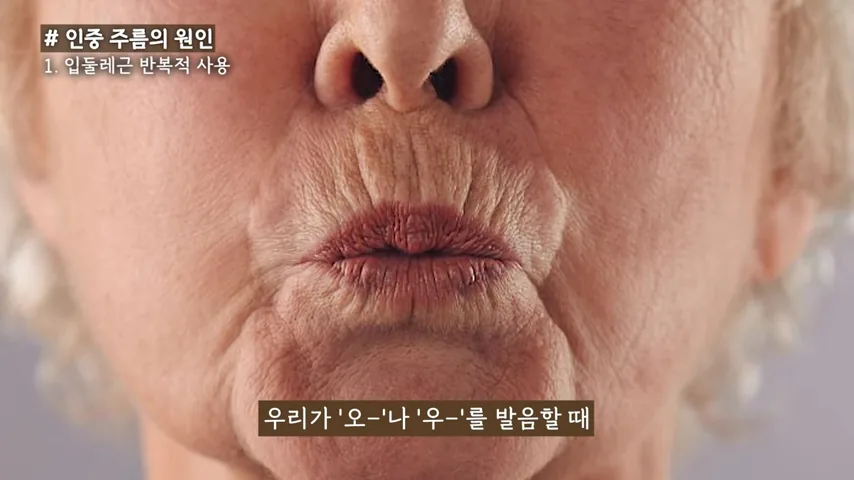
A ring-shaped muscle called the orbicularis oris surrounds the lips. Every time you push your lips forward, saying "oh" or "oo," drinking through a straw or smoking, this muscle contracts again and again. Each time, the skin above the lip folds, and the more often it folds, the deeper the lines become.
So if you tend to overuse this muscle, try to break the habit, and drink straight from the cup instead of using a straw.
Cause 2: Aging

When you fold paper, the crease stays. Skin that has lost firmness behaves in a similar way. With age, the components that keep skin firm decline noticeably, and the upper lip in particular loses firmness and thins faster. Skin that used to spring back right after folding increasingly stays in the folded shape as firmness drops.
Cause 3: Lifestyle Habits That Damage Collagen

Earlier I mentioned that pushing your lips forward, as when smoking, works the orbicularis oris and creates vertical lines. But smoking's effect doesn't stop at pursing the lips. Nicotine activates enzymes that break down collagen in the skin. The more you smoke, the faster the skin loses firmness and ages. A twin study published in 2013 also reported that smokers had much more pronounced upper lip lines than non-smokers.
Are You Applying Sunscreen Properly?

Even if you say, "I apply sunscreen every single day," think about what happens after a meal. You dab around your mouth with a napkin, and the sunscreen above your lip comes off with it. Most of your morning sunscreen gets wiped away, yet far more people just touch up their foundation than reapply sunscreen.
UV light is the biggest cause of collagen breakdown, so simply protecting against UV thoroughly means you're already doing a good job. If you want to slow aging, pay special attention to the area above your upper lip.

Habits to Change Today
To prevent upper lip lines and keep them from getting deeper, start by changing these habits.
Use straws less → Drink straight from the cup
Quit smoking → Less work for the orbicularis oris and less collagen damage
Reapply sunscreen after meals → Cover the area above your upper lip too
Break the lip-pursing habit → Notice the expressions you make without thinking
Final Thoughts
"Can little habits like these really make a difference?" you might think. But remember: the small habits you repeat every day add up to the face you'll have 10 years from now. Changing your habits alone can do a lot to keep upper lip lines from deepening.
Especially if you're still at the stage where the lines don't show when your face is relaxed, changing your habits now can keep them from becoming static wrinkles that stay even at rest. If you don't want to hear that these lines make you look older, start today, one habit at a time.
This article is general information about the treatment and does not replace an individual diagnosis or treatment plan. Results and their duration vary from person to person.
Wondering what would suit you?
Whether a treatment suits you, and how to plan it, is best decided with a doctor.