

How Botox, filler and lifting treatments such as Ultherapy and Thermage each work on forehead lines, and how they differ. Which one to consider first depends on how much of the wrinkle remains when you relax your forehead.

This post is adapted from an interview on DAYONE Clinic's YouTube channel, Face Design Lab.
Hello from DAYONE Clinic at Gangnam Station. Some people keep up massage at home and still feel they've hit a limit. If your forehead lines have set in deeply or your skin has lost a lot of firmness overall, it may be time to consider a treatment. Here, I'll go through three treatments for forehead wrinkles. If the lines almost disappear when you relax your forehead, start with Botox. If deep lines remain even when relaxed, add filler. If the skin as a whole has loosened, build the plan around a lifting treatment such as Ultherapy or Thermage.
Treatment 1: Botox
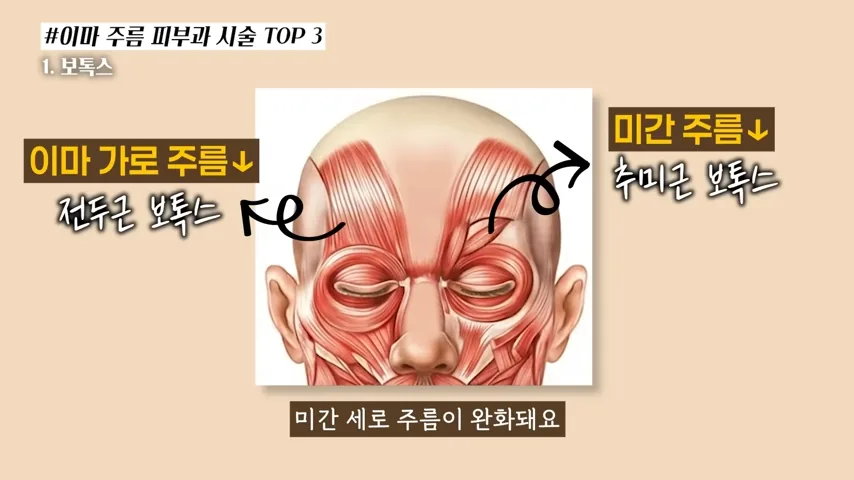
I mentioned earlier that forehead lines are caused by muscle movement. Botox works by resting muscles that are overworking. Reducing contraction of the frontalis, the forehead muscle, smooths the horizontal lines across the forehead, and relaxing the corrugator muscles between the brows softens the vertical lines.
There's one point you really need to know. People with heavy eyelids often use their forehead muscle to open their eyes, and if they get too much Botox in the forehead, it can weaken the strength they use to open their eyes, leaving the eyes feeling heavy and tired. That's why your eyelids must be checked before treatment.

Press your hand on your forehead to keep it still and try opening your eyes. If that's a real struggle, the Botox dose or injection points need to be adjusted. Even if your eyelids are heavy, focusing on the upper forehead rather than the whole area and keeping the dose to a minimum allows a very natural result.
In the end, a plan tailored to your condition matters most. Be sure to discuss this with your doctor before having Botox.
Treatment 2: Filler

Where Botox rests the muscles to keep new lines from forming, filler adds volume beneath lines that have already set in and lifts them from below. If your forehead is flat and the lines are deep, Botox alone may not be enough. In that case, restoring volume to the forehead itself with filler smooths the lines and brings back a gently rounded forehead contour. In fact, quite a few people in their 50s and 60s come in for filler because of forehead lines.
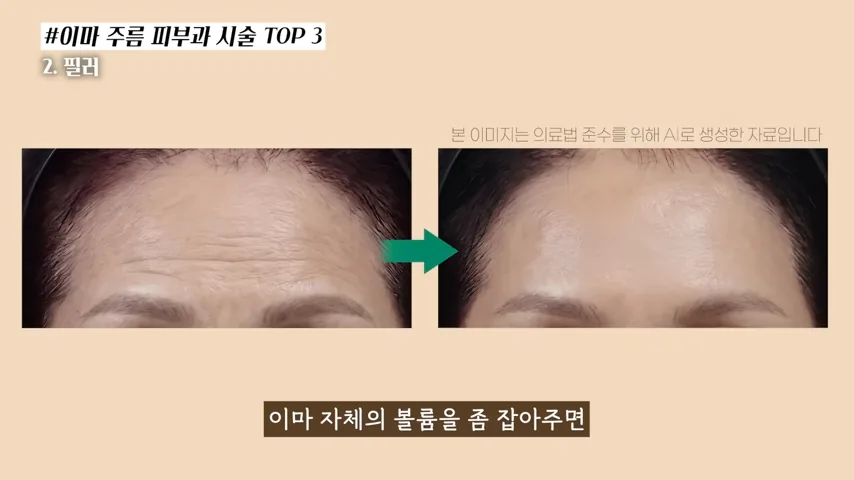
By combining the two treatments, using Botox to control the muscles and filler to restore volume, you can expect a more natural-looking result.
Treatment 3: Lifting Treatments (Ultherapy and Thermage)

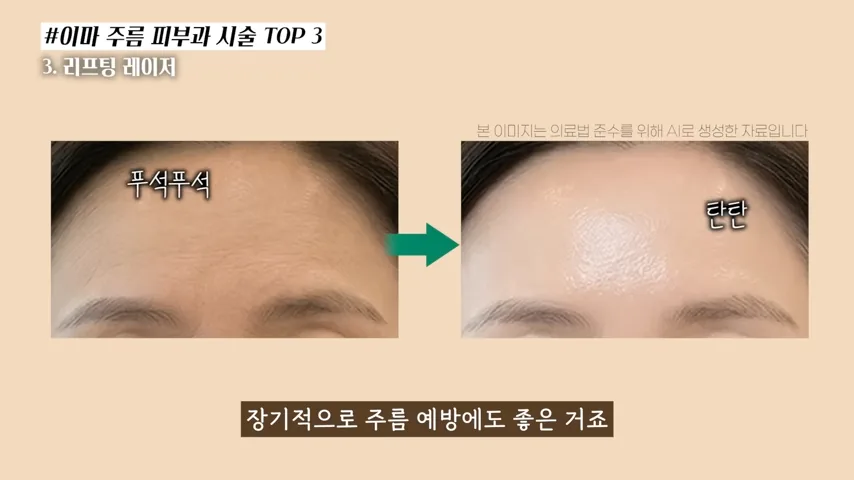
Lifting treatments help people whose forehead skin has lost a lot of its firmness. Botox and filler take effect relatively quickly, while lifting treatments such as Ultherapy and Thermage deliver heat to the deep layers of the skin to stimulate new collagen. The effect builds slowly, but because the skin's firmness itself improves, it's also a good way to prevent wrinkles over the long term.
Choosing Which Treatment to Consider First
So which treatment should you consider first? It varies from person to person. Here are the guidelines I give in consultations.
If your lines almost disappear when you relax your forehead, start with Botox.
If deep lines remain even when you relax, consider adding filler.
If your skin feels loose and has lost firmness overall, it's best to build the plan around a lifting treatment.

Summary
Relax your forehead in front of a mirror and you should get a rough idea of which group you're in. Forehead lines are treated differently depending on the cause, so finding the right combination for you matters most. Rather than worrying about it on your own, talk it through with your doctor before deciding. If you have any questions, feel free to ask anytime.
This article is general information about the treatment and does not replace an individual diagnosis or treatment plan. Results and their duration vary from person to person.
Wondering what would suit you?
Whether a treatment suits you, and how to plan it, is best decided with a doctor.