

Thin, fragile skin? Build a stronger foundation first with Re2O. Once sagging sets in, Ultherapy is the next step; when it’s more advanced, a thread lift. Here’s a step-by-step guide to choosing.

Hello from DAYONE Clinic. Regular fascia massage is an important part of ongoing care, but once sagging is well advanced, you’ll need help from an in-office treatment. That said, don’t just book whatever treatment other people rave about. The right treatment depends on your own skin.
Here, we’ll walk through three treatments and how to choose among them based on your skin’s condition.
Thin, fragile skin: start with Re2O skin booster
If your skin is very thin, dry, dull-looking and sensitive, going straight into a lifting treatment can mean weaker results, or results that fade quickly. Lifting treatments work better and last longer on skin that’s healthy and firm.

That’s why we recommend Re2O first for these patients. Re2O contains collagen, elastin and hyaluronic acid derived from human tissue, helping the skin repair and regenerate directly. While a typical skin booster stimulates your skin to do the regenerating on its own, Re2O takes a more direct approach: it creates the very environment the skin needs to regenerate.

If you have a lot of fine lines, or your skin has lost so much elasticity that your pores have stretched and elongated, two to four sessions can make a noticeable difference—your skin feels tighter, bouncier and thicker. Getting the skin itself into better health first, then moving on to a lifting treatment, can produce far more dramatic results.
Early sagging: Ultherapy
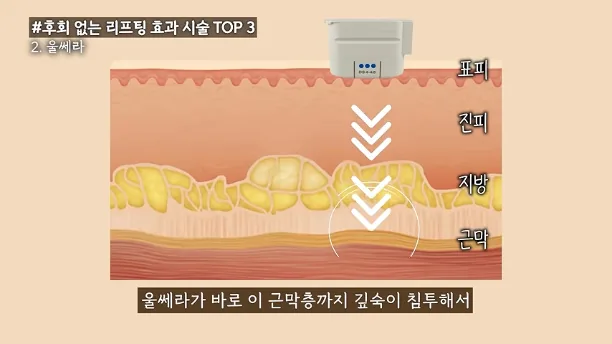
Often considered the benchmark among nonsurgical lifting devices, Ultherapy delivers focused ultrasound energy deep into the fascia layer to tighten sagging fascia. Its biggest advantage is depth: it can deliver energy as deep as 4.5 mm rather than just at the surface, so it can lift without damaging the outer layer of skin.
But stronger isn’t always better. Simply cranking up the intensity can cause side effects such as hollowed cheeks, or severely irritate the skin.

Intensity and shot count should be tailored to each patient’s skin thickness and degree of sagging, and it’s important to see an experienced provider with a good eye for treatment design. When sagging is too advanced for Ultherapy to address, it’s time to move on to a thread lift.
Advanced sagging: thread lift
A thread lift places dissolvable medical threads directly under the skin to physically lift sagging tissue. It’s especially effective where energy-based lifting alone falls short—think heavy tissue sitting over the smile lines, or jowls drooping below the jawline. Because results are visible almost immediately after the procedure, it’s also popular with people who have a big event coming up next month or who need to see results fast.
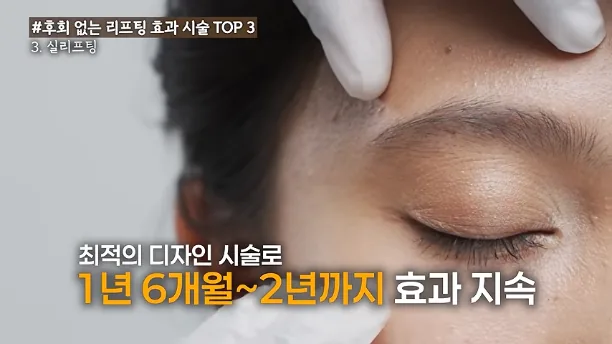
Results generally last about a year, but this varies from person to person—depending on the type and number of threads and the treatment design, they can last anywhere from 18 months to two years.
The bottom line

The key is knowing exactly what condition your skin is in right now. A step-by-step approach works best: if your skin is fragile, build the foundation first; use Ultherapy to tighten the fascia; and for more advanced sagging, lift the skin directly with a thread lift.
Aging happens to all of us, but how you care for your skin changes how that process unfolds. We recommend visiting DAYONE Clinic near Gangnam Station for an in-depth consultation with your doctor. We also cover this topic on our Face Design Lab channel, so be sure to check it out. If you have any questions, don’t hesitate to reach out.
This post is based on an interview from DAYONE Clinic’s YouTube channel, Face Design Lab.
This article is general information about the treatment and does not replace an individual diagnosis or treatment plan. Results and their duration vary from person to person.
Wondering what would suit you?
Whether a treatment suits you, and how to plan it, is best decided with a doctor.