

Facial sagging starts inside, not on the surface: changes in the dermis, fat, bone, and the retaining ligaments and SMAS. The four causes and how massage helps.
This article is based on an interview from Face Design Lab, DAYONE Clinic's YouTube channel.
Hello from DAYONE Clinic.
A sagging face isn't only a problem with the surface of your skin. Lots of people worry about sagging, so let's go through the four causes clearly. Once you understand them, you can approach massage or treatment much more effectively.
The Four Causes of Facial Sagging
1. Changes in the Dermis

Collagen, elastin and hyaluronic acid in the skin start to decline a little every year from your mid-to-late 20s. Together they form a kind of mesh that holds the skin taut. As that mesh loosens, the skin loses its bounce, gets thinner and turns slack.
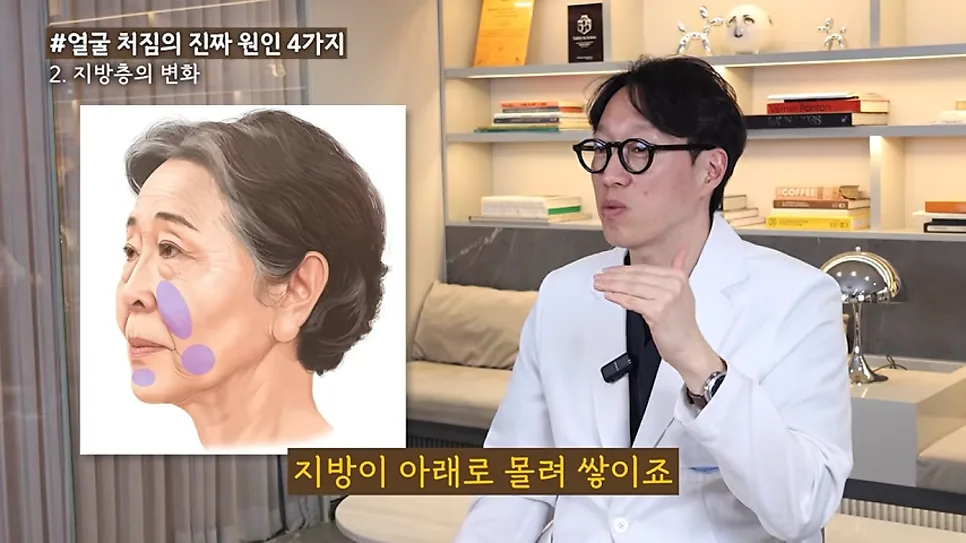
2. Fat Shifting Position
Facial fat isn't one solid mass. It's closer to a set of small, separate pockets. With age, fat under the eyes, at the sides of the cheeks and around the smile lines (nasolabial folds) shrinks and looks hollow, while fat above the smile lines and around the buccal area slides down and gathers lower. The top empties out and the bottom gets heavier, so the lower face gradually droops.
3. Changes in Bone
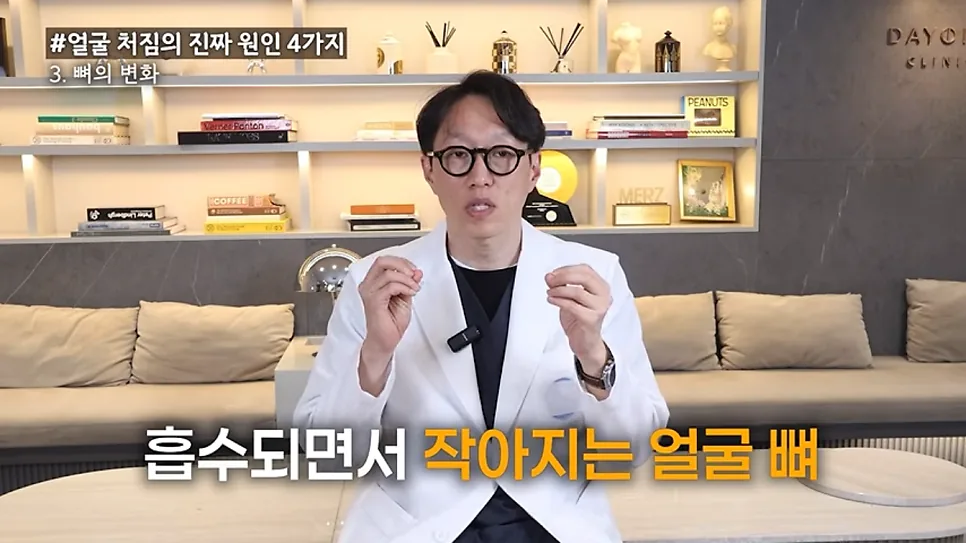
This is the part many people don't know: as you age, the facial bones themselves are slowly resorbed and get smaller. The eye sockets widen, the jawbone shrinks and the whole framework gets smaller. With less structure underneath, the skin and fat sitting on top hang lower and look more saggy.
4. Changes in the Retaining Ligaments and SMAS
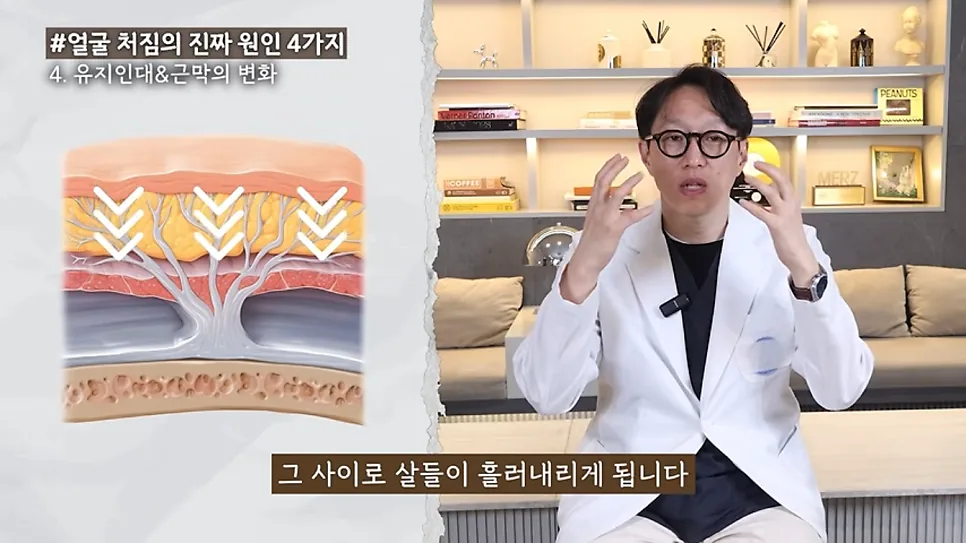
The retaining ligaments act like tent ropes, anchoring skin and fat firmly to the facial bones so they don't slide down. Over time these ropes loosen, and tissue starts to slip down between them.
Covering this framework is the facial fascia, known in medicine as the SMAS: a very thin, tough layer between the skin and the muscles. It's the layer surgeons focus on pulling up during a facelift. With age, or with repeated poor expression habits, the SMAS stiffens, and as it adheres it starts dragging the face downward like a fishing line.
The Bottom Line
Facial sagging isn't just a surface issue. It's aging that works from the inside out. Bone changes and stretched ligaments are hard to fully reverse with home care, but fascia massage can genuinely help. In the next post, we'll walk you through a five-step fascia lifting massage you can do at home. If you have questions, feel free to get in touch with DAYONE Clinic near Gangnam Station anytime.
This article is general information about the treatment and does not replace an individual diagnosis or treatment plan. Results and their duration vary from person to person.
Wondering what would suit you?
Whether a treatment suits you, and how to plan it, is best decided with a doctor.