

Facial sagging happens as the dermis, fat position, bone, and fascia and ligaments change together. We cover all four causes and how far massage can help.
This post is based on an interview from DAYONE Clinic's YouTube channel, Face Design Lab.
Hello from DAYONE Clinic. Ever finished a whole jar of expensive anti-aging cream and felt your skin looked about the same as before? Even people who've had regular skin treatments often feel frustrated: “Why does it seem to sag again a few months after treatment?”
So today we'll go over the root causes of facial sagging. You need to know the cause to care for it properly.
Why Your Face Changes: More Than One Cause
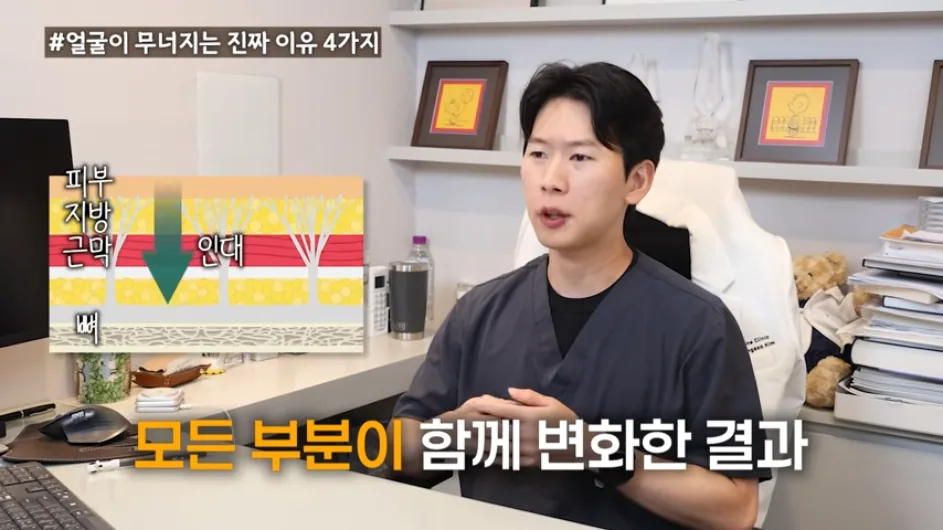
As we age, the face changes because the skin, the fat beneath it, the ligaments and fascia, and the bone all change together. Let's look at each of the four.
1. Changes in the Dermis
It starts with changes in the dermis, the layer beneath the epidermis. Collagen and elastic fibers in the dermis decline a little every year from your 30s. They interweave like a mesh to hold the skin taut, and as that mesh loosens, skin loses its bounce and thins, so fine lines and loss of firmness become more noticeable.
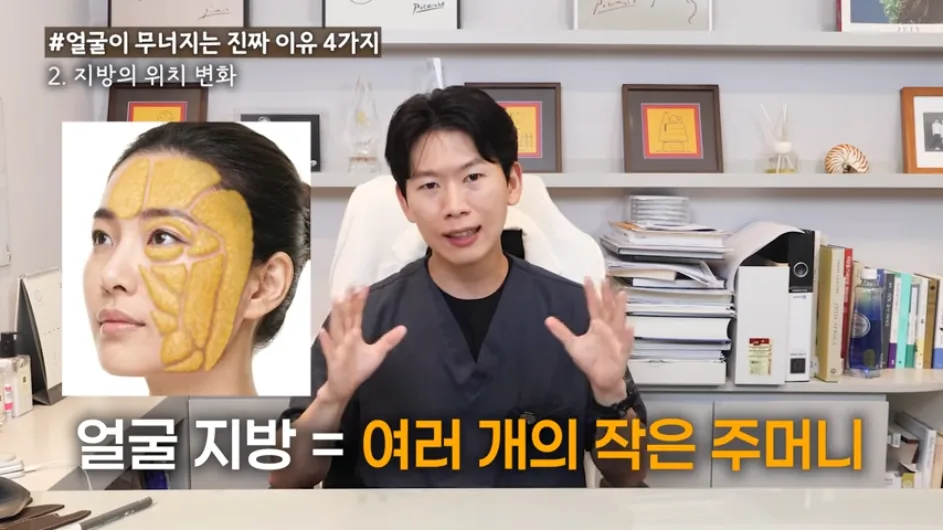
2. Shifting Fat
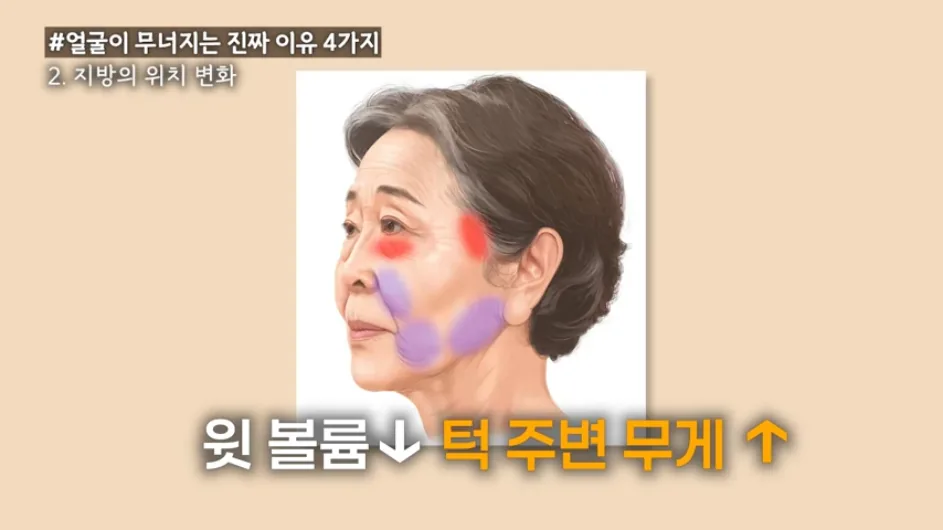
Facial fat isn't one single mass; it's made up of small, separate fat compartments. With age, these compartments respond a little differently in each area. The front of the cheeks and the temples look hollow, while the jawline looks relatively heavy, giving the impression that the center of the face has dropped.
3. Changes in the Bone
Many people don't realize this, but with age, it's not just fat—the facial bones themselves shrink through bone resorption. The eye sockets widen and the jawbone gets smaller, so the facial skeleton as a whole gets smaller. As the framework shrinks, the way it supports the skin and fat on top of it changes too.
4. Changes in the Fascia and Ligaments
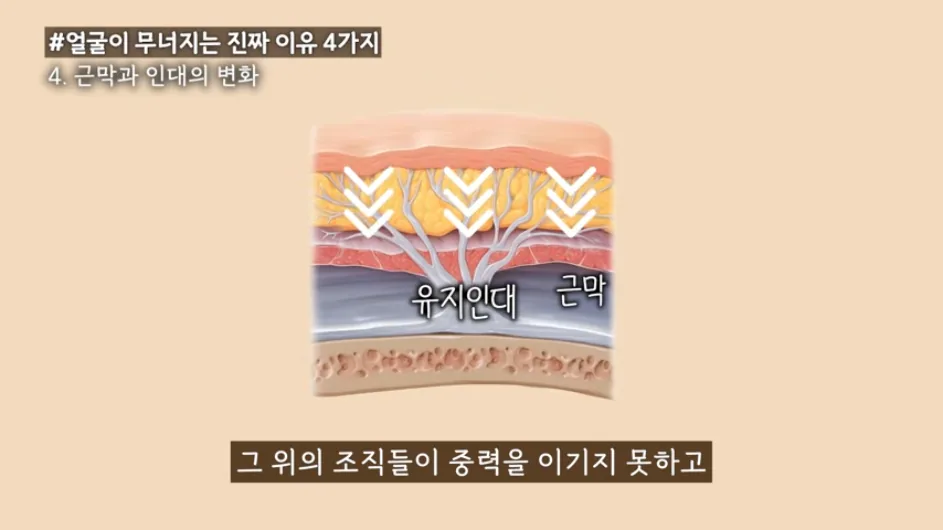
Just as a tent sags when its guy lines wear out, when the supports that hold the face up lose strength, the tissue above can't resist gravity and slides down below the jaw. That inner structure is exactly why even the most expensive cosmetics applied to the surface can't fix facial sagging.
How Much Can Massage Help?
To be honest, massage alone can't turn back changes in bone or stretched ligaments. Its role is to ease temporary puffiness and muscle tension with light pressure and movement, giving your face a more relaxed look.
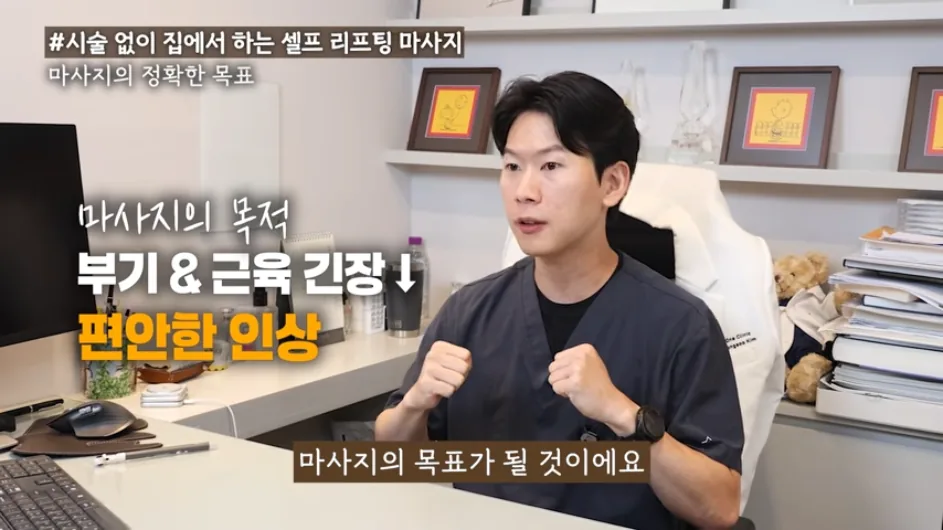
Rather than expecting a total transformation, keep at it as a way of smoothing out your facial contours a little every day.
The Bottom Line
Facial sagging is the result of the skin, fat, ligaments and fascia, and bone changing together, so cosmetics applied to the surface can't solve it on their own. In the next post, we'll walk you through a five-step facial massage you can do at home. If your sagging is already advanced or you want a more definite improvement, we recommend visiting DAYONE Clinic near Gangnam Station for a consultation with one of our doctors.
This article is general information about the treatment and does not replace an individual diagnosis or treatment plan. Results and their duration vary from person to person.
Wondering what would suit you?
Whether a treatment suits you, and how to plan it, is best decided with a doctor.