

Facial sagging comes from two things working together: tissue drooping under gravity and hollowing caused by collagen loss. That’s why the key is a combined approach—lifting the sagging areas with a thread lift and filling the hollow areas with filler. We also explain how the lift direction is planned differently for fuller and thinner faces, and why we recommend a thread lift before energy-based devices for people in their 50s and 60s.
Hi, this is DAYONE Clinic. You haven’t gained weight, yet your face looks heavier, wider and more square. Your smile lines and marionette lines seem to be getting deeper. These are the concerns we hear most often from people bothered by facial sagging.
Today we’ll use real cases to show exactly how we treat sagging and how we treat hollowing.
Sagging and hollowing: match the treatment to the cause
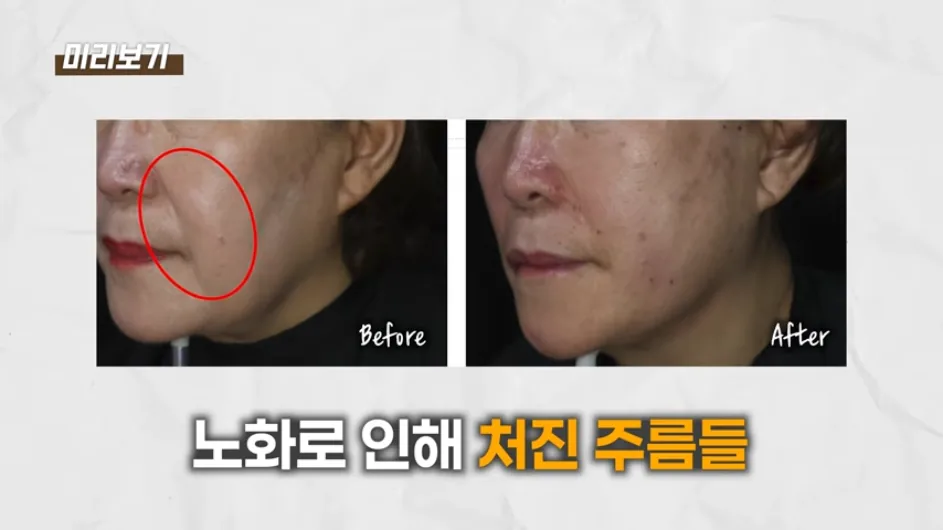
Facial sagging has two causes that work together: tissue drooping downward under gravity, and certain areas hollowing out as collagen is lost. Because the causes are different, the solutions have to be different too.

Sagging areas—lift with a thread lift
Hollow areas—restore lost volume with filler
If you rely on filler alone or a thread lift alone, one or the other will fall short. Using filler to fill in sagging areas as well tends to add too much volume, while a thread lift on its own can’t correct areas that have hollowed out. That’s why the key is combining the two, each targeted to its own cause.
Fuller faces and thinner faces need different approaches
If your face is on the fuller side and more angular, a thread lift is especially important for giving structural support to volume that has dropped. If your face is small and slim, on the other hand, hollowing is often more of a concern than sagging.

For these patients, a thread lift calls for caution. A forehead thread lift can make the upper eyelids look more sunken, and pulling from the cheekbone area can sometimes make hollow cheeks worse. So it’s important to map out precisely which direction to lift in and which points to lift from, so that hollowing is minimized—or even improved. Filling in the areas that have hollowed from a lack of fat with filler at the same time can give a much better result.

Why we recommend a thread lift first, not Ultherapy
There’s a reason we recommend a thread lift before lifting devices like Ultherapy for patients in their 50s and 60s: the difference in improvement is significant. If you score the improvement from a thread lift as 100, Ultherapy comes in at roughly 20 to 40.

In your late 30s or early 40s, even a subtle lift can make your face look noticeably refreshed. But in your 50s and 60s, when the degree of sagging and your skin’s elasticity have changed considerably, Ultherapy alone may not produce a visible enough difference. That doesn’t mean devices like Ultherapy or Thermage don’t work—it means that level of improvement may not be enough to address the concern. If you improve the sagging first with a thread lift and then add device-based lifting, the two treatments complement each other.
The bottom line
Getting the right plan for a sagging face starts with accurately identifying both the sagging and the hollowing. To find out which type your face is and which combination is right for you, we recommend coming in to DAYONE Clinic near Gangnam Station for an in-depth consultation with your doctor. If you have any questions, feel free to reach out anytime.
This post is based on an interview from DAYONE Clinic’s YouTube channel, Face Design Lab.
This article is general information about the treatment and does not replace an individual diagnosis or treatment plan. Results and their duration vary from person to person.
Wondering what would suit you?
Whether a treatment suits you, and how to plan it, is best decided with a doctor.