

A face can look bigger from fat or from sagging below the cheeks and along the jawline. Here's how to tell them apart and where energy-based lifting fits in.

Hello from DAYONE Clinic. Every time you look in the mirror, your face seems bigger than it used to—yet your weight hasn't changed, and you may even have lost a little. In photos, the lower half of your face looks heavy and spread out, especially when you're looking slightly down rather than straight at the camera.
Some people start looking into energy-based lifting because of this. But if you assume your face looks bigger simply because of extra fat, you may head in the wrong direction. Today we'll look at how to tell whether sagging is what's making your face look bigger.
Is Facial Fat the Same as Sagging?
There are two main reasons a face can look bigger. In one, there's simply more fat, so the face has more volume. In the other, the volume is about the same, but tissue has moved downward and changed the contours. The two can look alike from the outside, but they're different conditions.
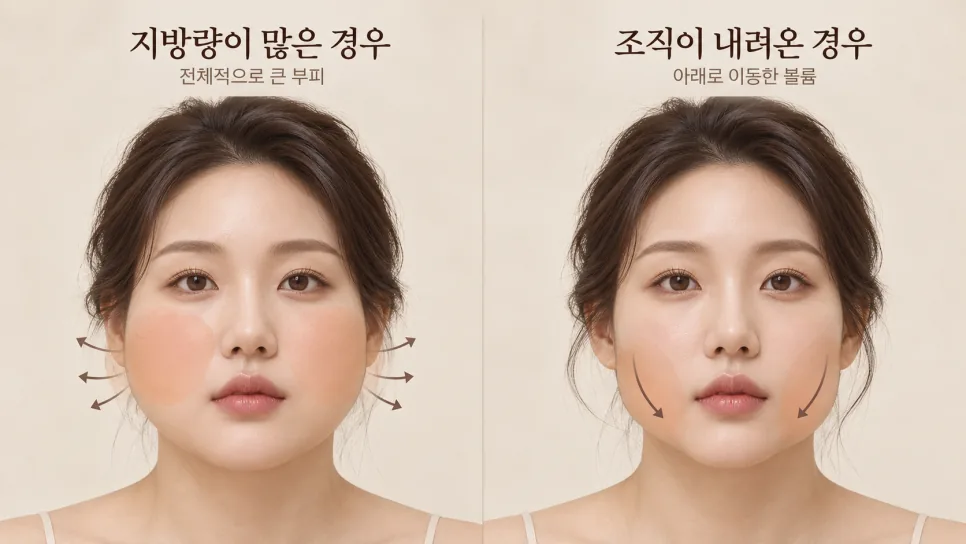
When it's fat, the whole face looks evenly round and full. When it's sagging, the weight seems to drop below the cheekbones and along the cheek line.
In that case, losing weight or reducing volume may not sharpen your facial contours. It can even make the cheeks look more hollow and the sagging more obvious. So “my face looks bigger” alone isn't enough to go on; first, look at why it looks that way.
When the Lower Cheeks and Jawline Lose Definition
When sagging starts, the first places to change are the lower cheeks and the jawline. The line that used to run fairly smoothly from below the ear to the chin can start to look broken and blurred partway along. You may notice a slight pooling beside the mouth, or the contour under your jaw may seem to collapse when you look down. These changes aren't just a surface skin issue.
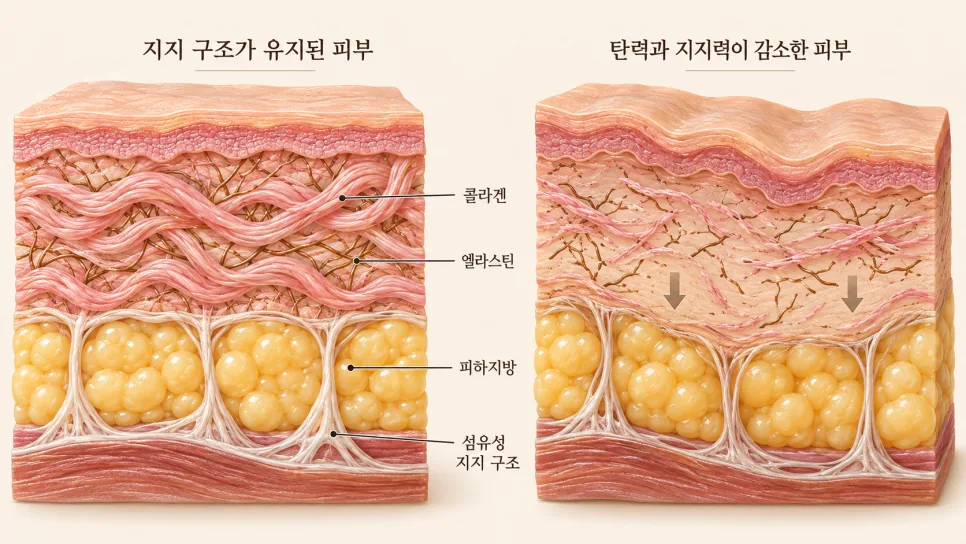
They often come from a loss of collagen and elastin, which keep skin firm, and from weakening support for the fat and tissue beneath the skin. But even with the same symptoms, the mix of causes differs from person to person. Sometimes the skin itself has lost elasticity; sometimes the structure of the face makes the cheeks prone to carrying weight. So even when people describe the same concern, what needs checking can differ.
Does Sagging Only Happen with Age?

It's easy to think of sagging as a concern for people in their 50s and 60s, but mild loss of firmness can easily show up in your 20s to 40s. Lack of sleep, frequent weight changes, UV exposure, dry skin, and long hours sitting with your head down can add up until your facial contours no longer feel as firm as they did.
At this stage, it shows up less as visible wrinkles or sagging and more as a vague sense that “my face looks wide in photos,” “my jawline isn't as sharp,” or “my face just looks bigger.” That makes it even harder to tell sagging from fat on your own. When changes are small, simply getting an accurate read on your condition helps you choose a direction later.
What Do DAYONE's Doctors Check?

At DAYONE Clinic, we put looking at the current state of your face ahead of choosing a treatment. Even when the concern is the same—a face that looks bigger—different causes call for different approaches.
Our doctors look at skin thickness and firmness, where and how much sagging there is below the cheeks and along the jawline, fat distribution, and the balance of the whole face. We also pay close attention to what bothers you most and how much change you'd like.
The change you want and the change that suits your face can differ. Making the face smaller as a goal in itself can end up looking unnatural, and often a direction that refines the contours without spoiling your current look is the more natural one.
When Is Energy-Based Lifting the Right Fit?
When loss of firmness is just starting and still mild, energy-based lifting is worth considering. It delivers heat energy into the deeper layers of the skin to maintain firmness. Rather than lifting visibly sagging areas, it's closer to helping skin stay firm before it loses more elasticity.
So it fits a condition people in their 20s to 40s often describe at consultation: sagging isn't severe yet but firmness is starting to go, or their weight is the same but the lower cheeks and jawline aren't as defined as before. But if sagging has already progressed, or the position and amount of fat is the bigger cause, energy-based lifting alone may not be enough.
In those cases, other approaches may need to be added, or the order changed. Which approach fits is something we can only tell you after examining your face in person.
How to Choose a Clinic You'll Be Happy With
Lifting isn't a one-time treatment. As time passes after treatment, you need to check how your skin responds and how the actual change compares with what you expected. If needed, we decide on adjustments at that point, and then look at a maintenance schedule together.
That's why we talk through follow-up checks, touch-ups and maintenance at the consultation. We believe a face that stays natural over time matters more than the result of a single treatment.
The Bottom Line
Your face may look bigger because of fat, sagging, or both. So if you're researching energy-based lifting, check what condition your face is in now before focusing on treatment names. Even with the same concern, the change you need differs from person to person.

DAYONE Clinic near Gangnam Station aims for energy-based lifting that keeps your own face while making you look softer and younger. Rather than changing how you look, we'll work with you to find the change that sharpens your contours and gives you a more relaxed look. If your face has looked bigger for a while, start with a consultation to see where things stand.

This article is general information about the treatment and does not replace an individual diagnosis or treatment plan. Results and their duration vary from person to person.
Wondering what would suit you?
Whether a treatment suits you, and how to plan it, is best decided with a doctor.