

Jowls beside the mouth don't come from weight gain alone. Here's how shrinking bone and loosening facial ligaments start the change, and how to use retinol at home as a first step.

This post is adapted from an interview on DAYONE Clinic's YouTube channel, Face Design Lab.
Hello from DAYONE Clinic. Every morning after I wash my face, the first thing I check in the mirror is my jawline. The full, heavy area beside the mouth that we call jowls is one of the trickier spots to treat, even for a doctor.
In consultations, many people ask me, “Isn't this just from gaining weight and sagging?” The reality is more complicated. Jowls form because bone, fat, muscle and skin all change together and affect one another, which is also why they can be tricky to treat in a clinic.
Still, once you pin down why they formed, there's real room for improvement. Below, I'll walk you through what causes jowls and how to choose the treatment that suits you.
Facial Aging Is Like an Old House
When patients ask, “Doctor, why do jowls form in the first place?” I often compare the face to a house built about 40 years ago. In a house like that, it isn't only the wallpaper and furniture that have faded. Even the pillars have started to lean, and there are repairs to make everywhere. The face ages in much the same way.

From the outside it looks as if only the top layer of skin is aging, but the change actually starts in the bone. You've probably heard that bone density drops as we get older.
The eye sockets gradually widen, the cheekbones thin, and the jawbone recedes and gets smaller. Once the framework holding up the skin weakens, the skin on top has nothing to rest on and starts to slide down.
Ligament Aging
Bone isn't the only thing that ages. Ligaments age too. The face has retaining ligaments that tether the skin to the bone. Put simply, they act like pins that hold the skin in place.

While those pins hold firm, fat and skin stay where they belong. Over the years, though, the pins stretch and loosen, and the fat and skin sitting on them are pulled down by gravity. When that fat gathers around the jaw, jowls take shape.
So jowls come less from the skin itself than from aging bone and ligaments. That's why quite a few people have smooth skin and still have noticeable jowls.
When Jowls Start to Appear
I'm also often asked, “At what age do jowls usually show up?” How fast you age depends on your genes and your lifestyle, so it's hard to give an exact age. Even so, in consultations I find that the point when people suddenly feel older tends to be much the same.
In the late 30s, the changes start to show. You may not notice anything at rest, but when you talk or smile, the muscles around your mouth feel heavier than before and the edge of your jawline begins to blur.
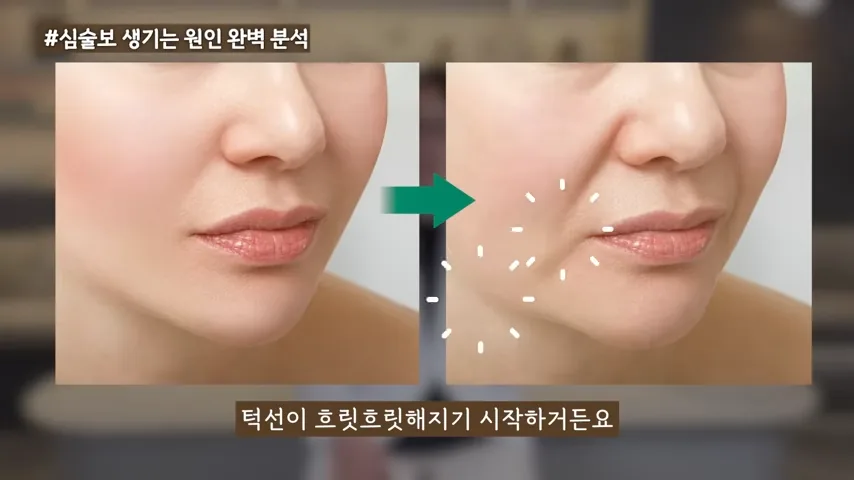
This is the stage where jowls are just starting to appear. By the mid-40s, we see the largest number of people coming in because they woke up one morning and felt their whole face had dropped.
That's why I recommend starting jowl care as early as your late 20s or early 30s. The approach should change with age, though. If you start early, in your late 20s, you shouldn't need to go as far as the more intensive treatments people have in their 50s. On the other hand, if sagging is already advanced, relying only on skincare and home care the way you would in your 20s has clear limits.
Home Care 1: Retinol
Now let's look at ways to care for the jawline, starting with what you can do at home. The first is retinol. It's an ingredient I never leave out of my own skincare, and one I truly value.
There's a reason I rate it so highly. As we age, skin renews itself more and more slowly. Retinol helps old dead skin cells shed faster and healthy new cells come to the surface, speeding up the rate at which skin rebuilds itself.
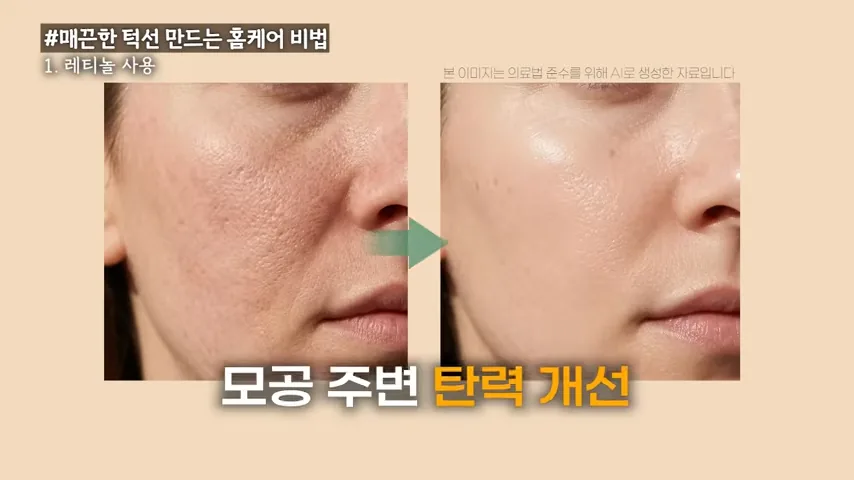
With regular use, a dull complexion brightens and thin, weak skin gradually feels firmer. The skin around your pores also gets firmer, so you can expect pores to look smaller too.
Retinol Precautions
Because it works so well, retinol is also quite irritating, so it needs to be handled with care. Some people think more means faster results, slather it on, and end up with a bad reaction. Start with a tiny amount, about the size of a grain of rice, on a very small area.
I apply it mainly around my eyes, around my mouth and between my brows, where fine lines form. If your skin is sensitive, even this small amount can cause flaking or redness.

If that happens, mix it with your usual moisturizer and it will feel much gentler.
Start With a Low Concentration

Retinol products come in a range of strengths. If you're new to retinol, I recommend starting with a low concentration of around 0.025–0.03%. Use it every other day rather than daily: at night after cleansing, smooth on a thin layer of moisturizer, then add a very small amount of retinol on top. Give your skin two to four weeks to get used to it, and if everything is fine, slowly increase the strength or how often you apply it.
What I find most disappointing is when people try retinol a few times and stop as soon as their skin gets a little sensitive. If you give your skin enough time to adapt, few skincare ingredients reward you as much. It's too good to give up on easily, so unless your skin is extremely sensitive, use it the right way and keep going.

One more thing: apply retinol only at night, when there's no sunlight. It's sensitive to light, and if you go out in the sun with it on, your skin can sting.
Summary
Remember that jowls start with aging bone and ligaments, and that retinol can speed up the rate at which your skin renews itself. In the next post, I'll cover keeping a steady, healthy weight and filler treatment in detail. If you have any other questions, feel free to contact DAYONE Clinic at Gangnam Station.
This article is general information about the treatment and does not replace an individual diagnosis or treatment plan. Results and their duration vary from person to person.
Wondering what would suit you?
Whether a treatment suits you, and how to plan it, is best decided with a doctor.