

Before a thread lift, three mirror checks—pinching your cheek, comparing your jawline with your head tilted down, and pulling the skin in front of your ears—can help you gauge which technique suits your face. The direction of the lift also needs to match your face shape for a natural-looking result.

Hi, this is DAYONE Clinic. If you’ve been looking into thread lifts, someone may have told you your face is a “difficult” one. That doesn’t mean the procedure can’t be done. It’s more that a simple, basic technique isn’t likely to work well, and your face calls for a highly skilled, customized approach.
So today, we’re sharing a three-step self-check you can do in front of the mirror before your consultation.
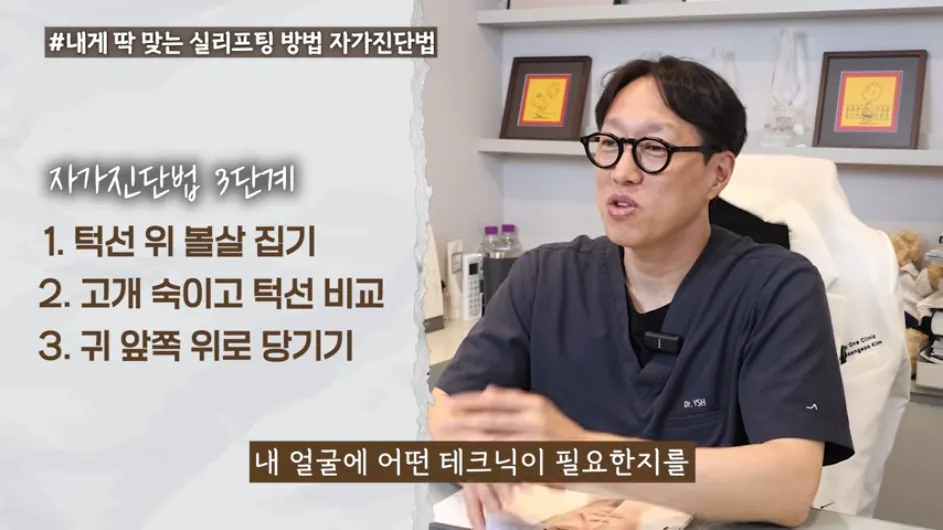
The three-step self-check

Step 1: Gently pinch your cheek
Using your thumb and index finger, gently pinch the cheek just above your jawline.
If there’s so little tissue that you can feel only bone → you’ll need a delicate technique that carefully works through each layer of skin separately
If you can grab a thick, heavy roll between your fingers → the key is specialized threads that can firmly support that weight, plus a multi-angle placement pattern
If it feels soft and about as thick as one finger joint → you can reasonably expect good results with a standard approach

Step 2: Tilt your head down about 45 degrees
Compare your jawline when you’re looking straight ahead with how it looks when your head is tilted down.
If the sagging looks about the same either way → laser lifting devices alone may be enough to improve it
If your jawline looks fine head-on but the moment you look down, the tissue seems to spill under your jaw → we recommend giving a thread lift serious consideration
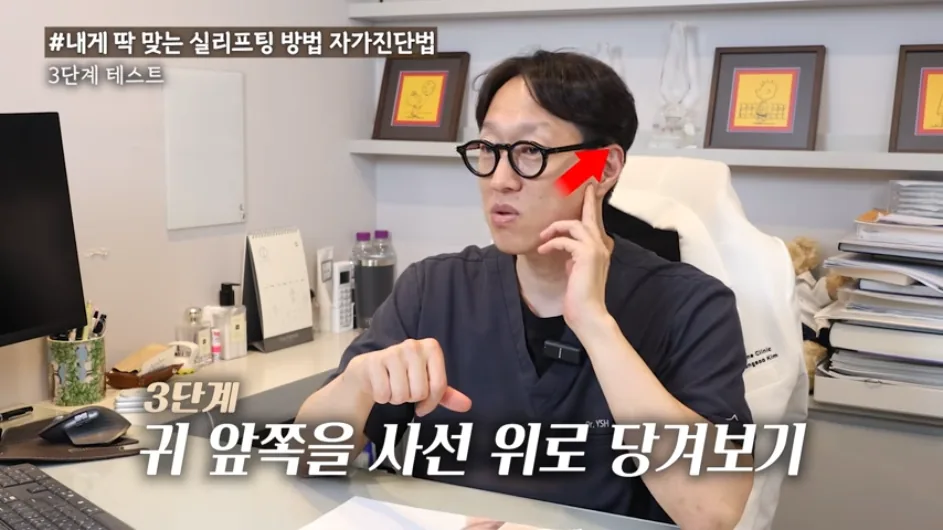
Step 3: Place your fingers in front of your ears and gently pull upward on a diagonal
Pull until your jawline looks slimmer.
If the lifted contour looks smooth and you like what you see → you can expect results you’re happy with from a standard approach
If the skin bunches up in thick folds above your fingers → you’ll need a three-dimensional pattern that distributes the tissue in several directions
This self-check isn’t about ruling you out. It’s simply a guide to help you gauge which technique your face may need.
Lift direction depends on your face shape

With a thread lift, how the direction of lift is planned has a big impact on the result. If sagging tissue is pulled only straight up, a round or square face can end up with volume bunching at the sides, which can actually make the face look wider. We do see patients who had the procedure elsewhere come in saying, “My face actually looks bigger now”—and in most of those cases, the direction of lift wasn’t right for their face shape.
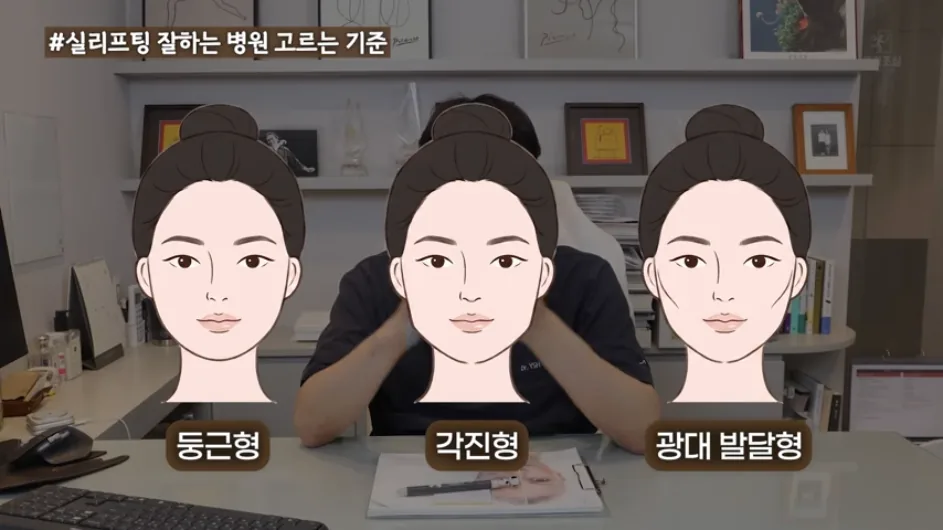
If you have prominent cheekbones, lifting toward them can make them look even more pronounced. That’s why it’s important to look in the mirror with your doctor before the procedure and simulate which direction looks most natural. Whether a face looks better pulled back or pulled up varies from one face shape to the next.
Final thoughts
How did your self-check go? These three steps are only a rough guide to point you in the right direction. For an accurate diagnosis, be sure to come in to DAYONE Clinic near Gangnam Station and consult with your doctor. If you have any questions, feel free to reach out anytime.
This post is based on an interview from DAYONE Clinic’s YouTube channel, Face Design Lab.
This article is general information about the treatment and does not replace an individual diagnosis or treatment plan. Results and their duration vary from person to person.
Wondering what would suit you?
Whether a treatment suits you, and how to plan it, is best decided with a doctor.