

Cheeks can start to look like they’ve dropped for different reasons—lost skin elasticity, shifting fat or volume loss—and the cause varies from person to person. Here’s when a thread lift may be worth considering, and why the order of treatments and follow-up afterward matter for a natural-looking result.
Hello from DAYONE Clinic. You haven’t gained weight, and nothing is really wrong with your health, yet one day you notice that you look tired—or somehow older—in photos. Many people tell us it isn’t so much that they have more wrinkles; it’s that the center of the face seems to have sunk lower, and their cheeks don’t lift the way they used to when they smile.
Many people looking into lifting treatments at a dermatology clinic wonder whether a thread lift could address changes like these. So today, let’s take a careful look at whether a thread lift can help with the changes that come with time.
Why do cheeks look like they’ve dropped?
The cheek area isn’t made of skin alone. Beneath the skin is a layer of fat supported by fascia and ligaments, and deeper still lies the bony structure of the face. As we age and this support system gradually loosens, the volume that once sat in the cheeks can slowly shift downward.
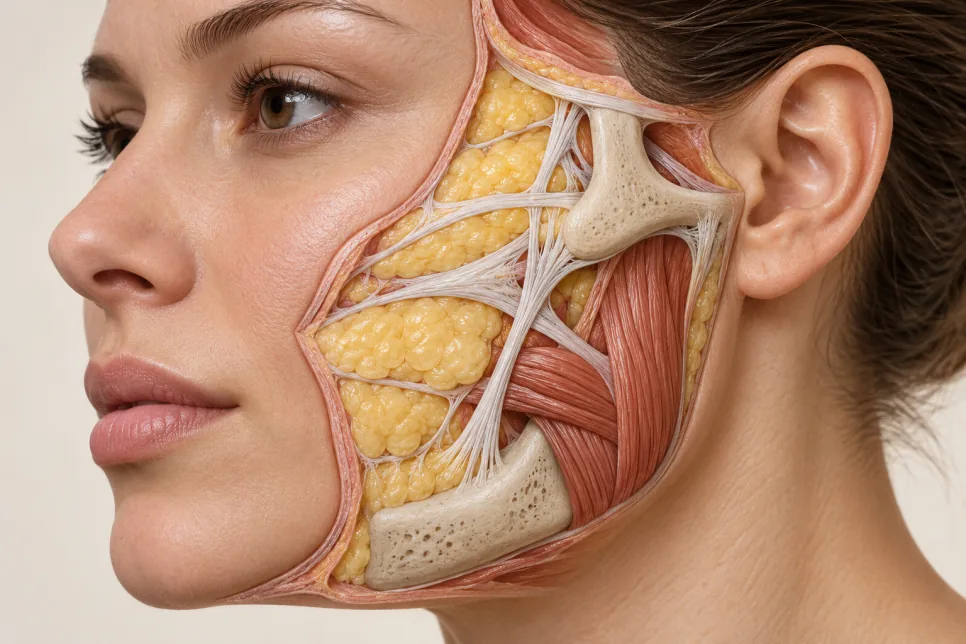
At the same time, the skin itself loses elasticity, so the same amount of volume looks heavier and droopier. Interestingly, as tissue sags, the area above it can start to look hollow. The area under the cheekbones may flatten, or the line running from under the eyes into the cheeks may look sunken, while tissue seems to bunch up beside the mouth. That’s why it’s hard to sum this up with a single word like “sagging”—it takes a closer look at what has changed, and where, for each person.
Is it just about skin elasticity?
When people talk about sagging cheeks, they often think only of lost elasticity, but in reality several factors are at play. In some cases the skin has thinned and lost elasticity; in others, the cheek fat has moved lower; in still others, an overall loss of bone and tissue volume makes the face look saggy by comparison. Even when two people are the same age and seem to have the same degree of sagging, a different mix of causes can call for a different approach.
For example, if skin elasticity is the main issue, firming treatments such as laser or radiofrequency may be considered first. If the main concern is tissue that has moved downward, options that help support its position come into play, and if volume itself has been lost, lifting what has sagged may not be enough on its own. Which of these situations a thread lift may suit is ultimately something that has to be judged by examining the face in person.
When might a thread lift be worth considering?

A thread lift refines sagging areas by supporting the tissue beneath the skin. If you look in the mirror, gently push your face upward with your hands, and your face looks noticeably more at ease, that may be a sign that the position of sagging tissue is changing your overall look. In cases like this, a thread lift is often discussed as one option.
What matters most, though, isn’t “Does it pull things up?” but “Which area should be refined, in which direction and by how much, for it to look natural?” If someone with sagging cheeks is treated by simply pulling everything upward, the midface can end up looking unnaturally bunched, or their expressions can look off. That’s because the change you want and the change that suits your face aren’t always the same. Especially from your 50s on, finding a natural degree of refinement that doesn’t take away from the face you have now tends to matter more for satisfaction than trying to get your old face back.
Why does a lift sometimes look unnatural?
You may have heard someone say that a person they know looked oddly unfamiliar after a lift. In most cases, the issue isn’t so much the procedure itself as a big change made in one area without enough attention to the balance of the whole face. If only the cheeks are lifted and they no longer connect smoothly with the mouth area or jawline below, the flow of the face can look broken.
That’s why it’s important to look beyond the sagging area itself—at the face from the front and from the side, and at how it moves with expression. Checking how the cheeks rise when you smile, how the corners of the mouth move when you talk, and where your everyday expressions create lines helps keep your expressions natural after treatment.
Does the order of treatments matter?
Expecting a thread lift alone to solve every concern when the cheeks have dropped can leave a gap between expectations and results. Skin that has lost elasticity may be refined with laser lifting; skin that looks dull or has thinned may benefit from a skin booster to improve its overall quality; and hollow-looking areas may be supplemented with options such as filler. When combining treatments like these, though, the order you do them in can affect how natural the result looks just as much as which treatments you choose.
For example, if hollow areas are filled before sagging tissue has been repositioned, the added volume sits on a face that has already dropped and can end up looking heavier. On the other hand, refining the sagging structure first and then looking at any remaining elasticity and volume concerns often makes it easier to add only what’s truly needed while keeping the overall balance. Of course, this order isn’t a one-size-fits-all answer; it can vary depending on your skin condition, the degree of sagging and the change you’re hoping for.
That’s why, rather than adding more treatments, it’s far more important to pin down what changes your face actually needs right now and to plan the order in which to address them. Adding treatments you don’t need can actually throw off the balance of your face.
What gets checked after treatment?
A thread lift doesn’t end on the day of the procedure—it includes watching how your face settles afterward. Right after treatment there may be some swelling or a feeling of tightness, and over time you’ll see your expressions and facial contours settle naturally. During this period, we check whether the original plan is working as intended and whether anything needs refining, then make careful adjustments if needed.
At DAYONE Clinic, we treat every step—from your first consultation to the procedure, follow-up checks and touch-ups, and ongoing maintenance—as one continuous process. The goal isn’t a one-and-done procedure, but working with you so your face continues to look its best as you over time.
The bottom line
If you’re researching lifting treatments, it’s natural to wonder whether a thread lift is a good choice or which procedure is better. But before asking which treatment is best, it’s worth figuring out what has actually changed in your face and which changes will preserve the look that feels like you. Depending on whether your cheeks have dropped, your skin has lost elasticity or your volume has shifted, the same concern can lead in completely different directions.
What DAYONE Clinic aims for isn’t to make you look like someone else, but a change that gives you a softer, more youthful look while your face stays your own. If something about the way you look in photos keeps bothering you, we encourage you to have your current facial condition assessed before deciding on a treatment, so it can be refined into a more relaxed look. Taking the time in a consultation to carefully explore what direction your face needs can be the best place to start.

This article is general information about the treatment and does not replace an individual diagnosis or treatment plan. Results and their duration vary from person to person.
Wondering what would suit you?
Whether a treatment suits you, and how to plan it, is best decided with a doctor.