

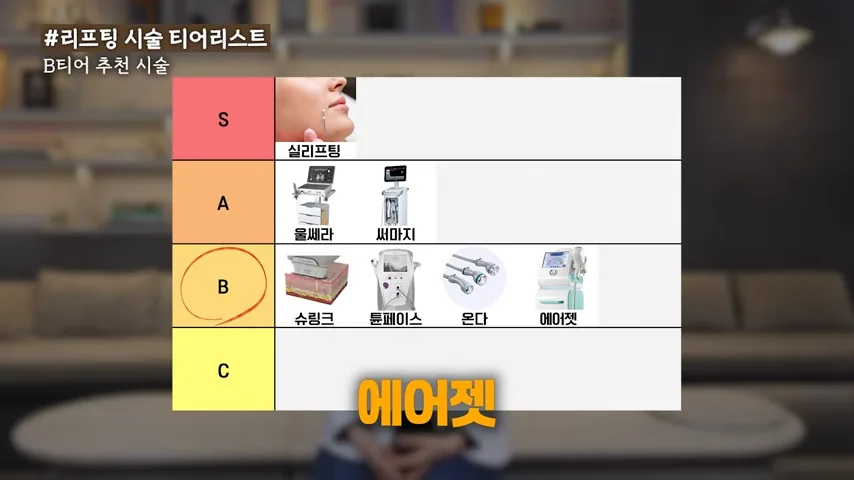
Shurink, Tune Face, ONDA and AirJet are milder than Ultherapy or Thermage but offer great value and suit upkeep every 3–4 months. Here's how each one works.
This article is based on an interview from Face Design Lab, DAYONE Clinic's YouTube channel.
Hello from DAYONE Clinic. Last time I covered the S-tier thread lift and the A-tier treatments, Ultherapy and Thermage. Today I'll take a closer look at the B-tier lifting treatments, which offer good value and are easy to keep up with.
B-Tier: Best for Value and as Add-On Treatments
Next up is B-tier: Shurink, Tune Face, ONDA, AirJet and others. These treatments tend to be milder than Ultherapy or Thermage, but they offer good value for it and work really well as add-on treatments. If Ultherapy or Thermage is something you have once every six months to a year, these suit regular maintenance on a shorter cycle, about once every 3–4 months.
Shurink: The Value Version of Ultherapy
First, Shurink works on exactly the same principle as Ultherapy. It uses ultrasound energy to heat the deep layers of the skin. The difference is that Shurink is a Korean-made device.
It can't deliver energy to the deep layers as precisely as Ultherapy, so the lifting effect and how long it lasts can be a little less. But it costs much less and hurts less than Ultherapy, so all things considered, it's a good-value treatment.
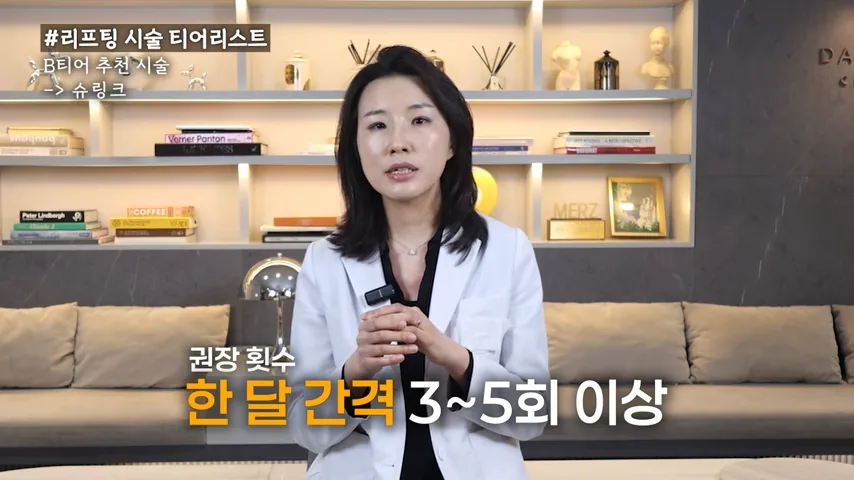
I usually recommend 3 to 5 sessions of Shurink, one month apart. With regular sessions, the skin keeps getting heat stimulation, collagen keeps renewing and firmness improves. So if Ultherapy feels like a big step but you want a similar effect, or you're still fairly young, your sagging isn't severe and you just want light maintenance, Shurink is a really good option.
Several Shurink Sessions vs. One Ultherapy Treatment?
People ask me, “So, Doctor, if I have Shurink several times, will I get the same result as one Ultherapy treatment?” Not really. The biggest difference between Shurink and Ultherapy is how deep into the skin they reach.
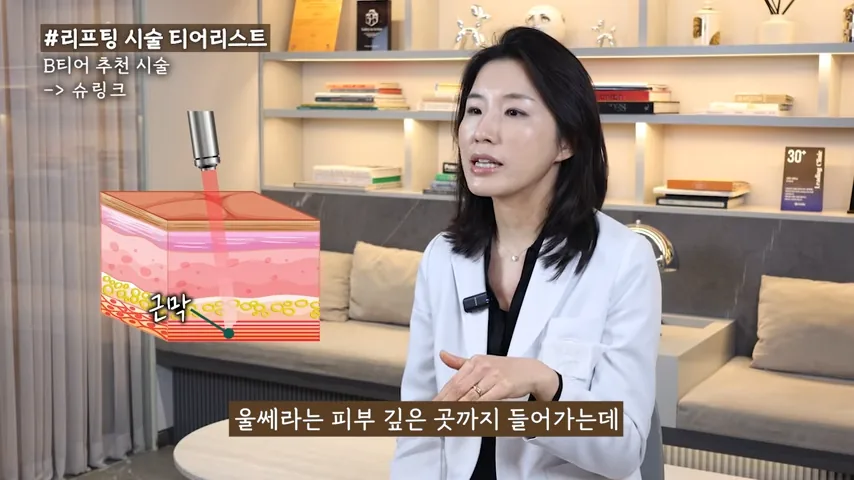
Ultherapy reaches deep into the skin, while Shurink only goes as far as the lower dermis, so the results won't match Ultherapy, which concentrates on the fascia layer.
Tune Face: Best for Pain-Sensitive Patients
Next is Tune Face.
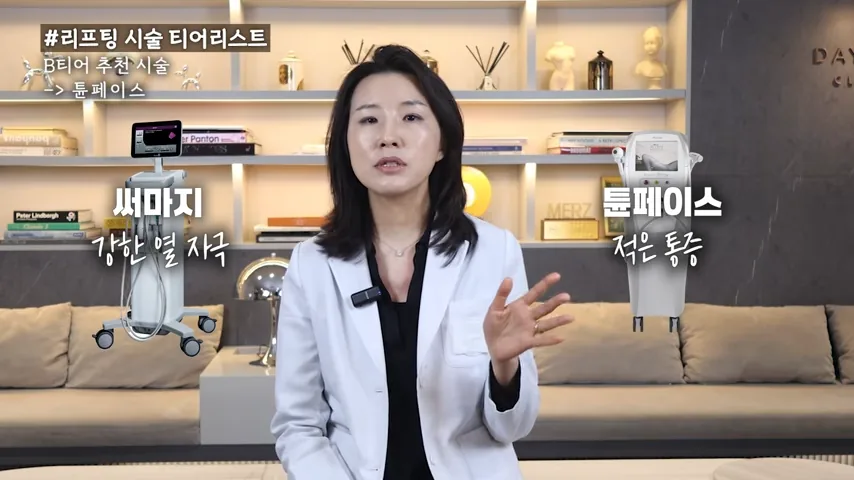
Tune Face is the first treatment I recommend for people who are sensitive to pain. It uses radiofrequency to deliver heat to the skin, so think of it as working on a similar principle to Thermage. The difference is that it hurts far less than Thermage.
Thermage fires powerful radiofrequency in single bursts, so it feels prickly and hot. Tune Face applies gentler, continuous heat, so it feels warm or slightly hot rather than painful. Some people even doze off during the treatment.
Its effect focuses on restoring skin firmness and smoothing out facial contours. Tune Face works especially well for people whose thin skin has sagged and lost its strength, and for people with little cheek fat whose skin alone has gone slack. It doesn't go as deep or as strong as Thermage, but it clearly tightens the outer skin.
ONDA: Fat Reduction Too
Next is ONDA, a device that's become popular over the last few years. It's a lifting treatment that uses microwave energy, and its biggest advantage is that it also reduces fat.
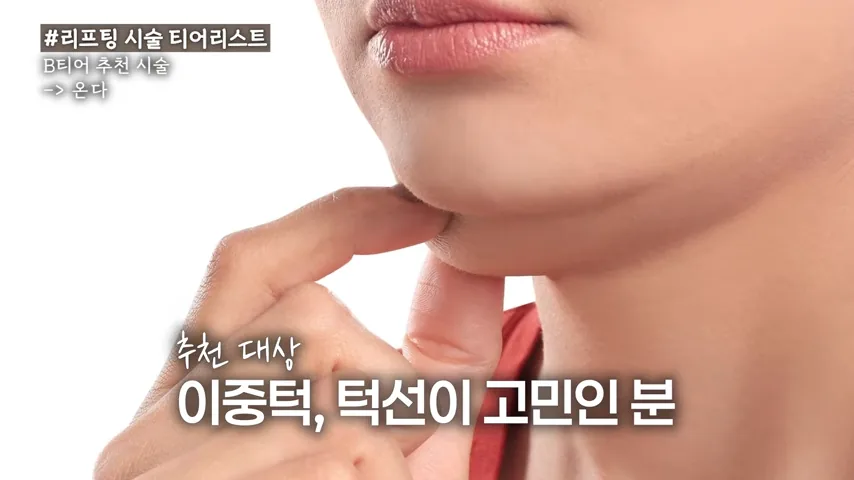
That's why patients bothered by a double chin or an undefined jawline are very happy with it. Typical lifting devices focus on tightening or lifting the skin, but ONDA also shrinks and breaks down fat cells in the subcutaneous fat layer. So if a double chin makes your jawline look blunt, ONDA can bring your jawline back into sharp definition.
It also has an excellent cooling system, so the pain isn't bad. Usually, after about 4 to 6 regular sessions, the results become clearly noticeable.
It works especially well for the jawline when combined with a thread lift. Lift the sagging tissue first with a thread lift or Ultherapy, then clear the remaining excess fat with ONDA, and you can see a real change in your jawline.
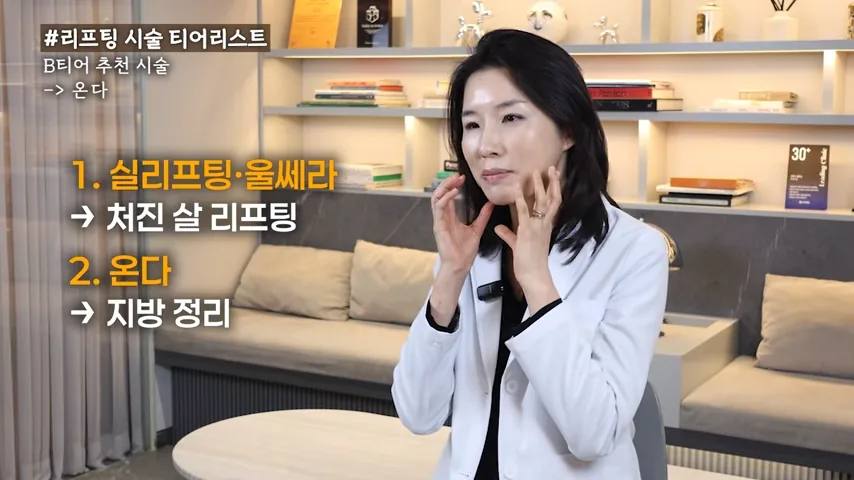
ONDA Isn't Just for Double Chins
People ask, “Everyone recommends ONDA for a double chin. Is it a double-chin treatment?” Not only that. It can be used to lift the whole face too. Its fat-reducing effect is simply so strong that results show especially well in areas with more fat, like the double chin and the deep cheek fat near the mouth.
AirJet: A Good One-Day Treatment
The last B-tier treatment is AirJet.
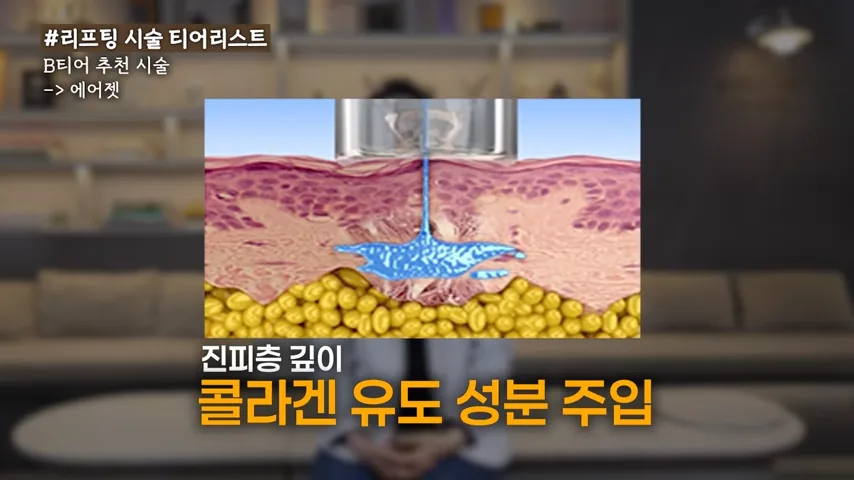
As the name suggests, it uses air pressure to shoot collagen-stimulating ingredients deep into the dermis. What's unusual is that it's delivered into the scalp, which also stimulates the fibers that anchor the skin and connect the scalp to the face. You know how pulling your hair back tight lifts your face? AirJet works in a similar way, gently lifting the whole face as one broad surface.
The forehead, the area above the brows and the temples are pulled up together, so the upper face in particular feels firmer. The effect is immediate: look in the mirror after treatment and you can see your eye area lifted slightly and your forehead smoother. That's why patients whose drooping eyelids make their eyes look smaller, or who are bothered by forehead lines, are very satisfied with it.
The Downside: It Doesn't Last Long
People ask, “Just going by the effects, doesn't it sound much more immediate and better than Ultherapy?” Because the effect is more immediate, I can see why it would feel that way.
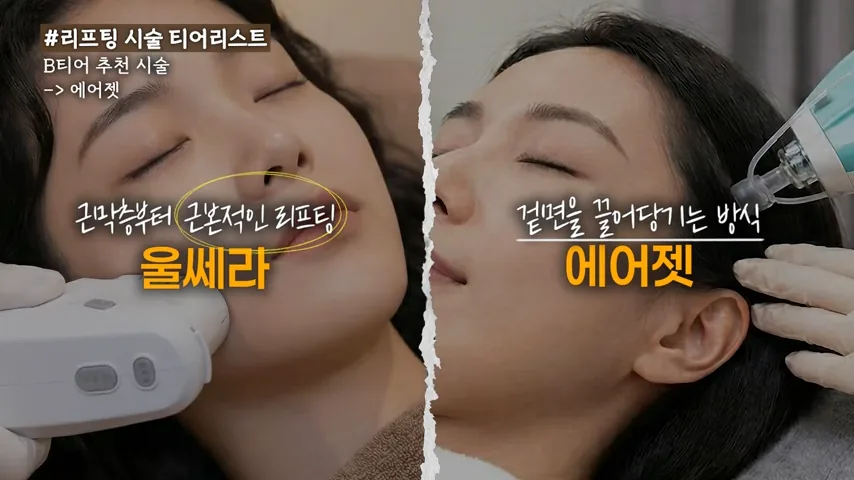
Ultherapy stimulates the fascia layer deep in the skin for a more fundamental lift, whereas AirJet is closer to pulling up the surface of the skin. So its downside is that it doesn't last long, usually about 2–3 weeks. Rather than for a lasting lift, people often choose it as a one-day treatment before an important event, a photo shoot or any time they need to look their best.
The Bottom Line
Remember, the B-tier treatments covered today offer good value and are easy to keep up with. In the next post I'll cover the C-tier treatments and a complete guide to choosing a lifting treatment. If you have any questions, feel free to contact DAYONE Clinic near Gangnam Station anytime.
This article is general information about the treatment and does not replace an individual diagnosis or treatment plan. Results and their duration vary from person to person.
Wondering what would suit you?
Whether a treatment suits you, and how to plan it, is best decided with a doctor.