

Pores come in two types: round pores stretched open by excess oil, and elongated, teardrop-shaped pores that sag as skin loses firmness. The causes differ, so the care does too. BHA and retinol are the basics for round pores, and thorough sun protection for elongated ones.
This post is adapted from an interview on DAYONE Clinic's YouTube channel, Face Design Lab.
Hi, this is DAYONE Clinic. "Once your pores get big, you can't undo it. You'd have to be born again." Sound familiar? It shows how many people struggle with pores. But there's no need to be that pessimistic. Round pores are stretched open by excess oil, while elongated pores sag downward because the skin has lost firmness. Because the causes differ, round pores call for BHA and retinol, and elongated pores start with sun protection.
Even pores that have already enlarged can look noticeably smaller with care that matches the cause. The main reason care doesn't work is that people copy whatever others say works without knowing why their own pores got bigger. Today I'll explain how to tell which type you have and how to care for each one.
Two Types of Pores
"Isn't it all down to oil in the end?" Many people assume so. But look closely and everyone's pores differ in shape and in where they cluster, and those differences point to different causes. Different causes need different treatment. Trying to fix them all the same way is why they don't improve.
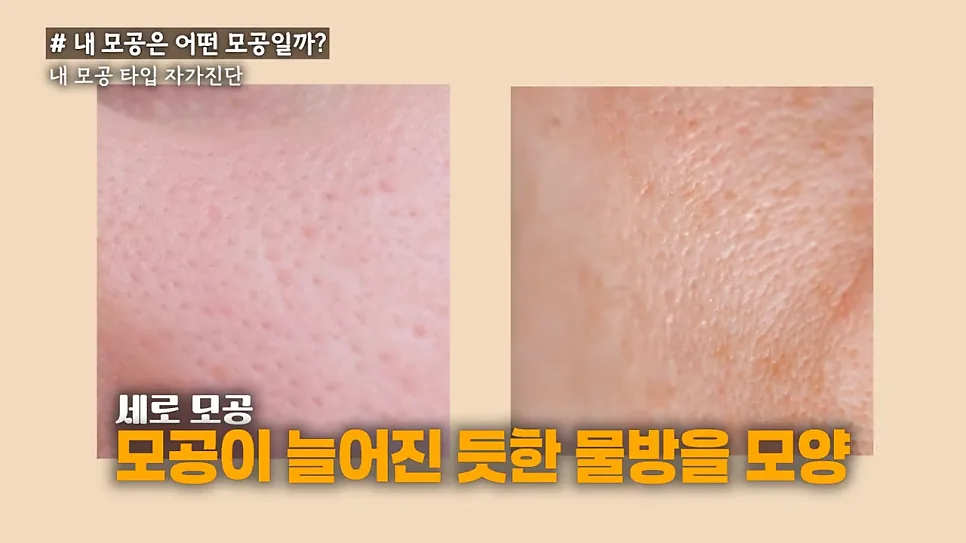
Pores fall into two broad types: round and elongated. Round pores look like little circles, while elongated pores stretch downward like a teardrop.
The two types form for completely different reasons. Many people think enlarged pores come with age, but plenty of teenagers have large pores too. When pores are large at a young age, they're almost always the round type.
Round Pores Caused by Oil
Round pores are pores that have been stretched open by too much oil.
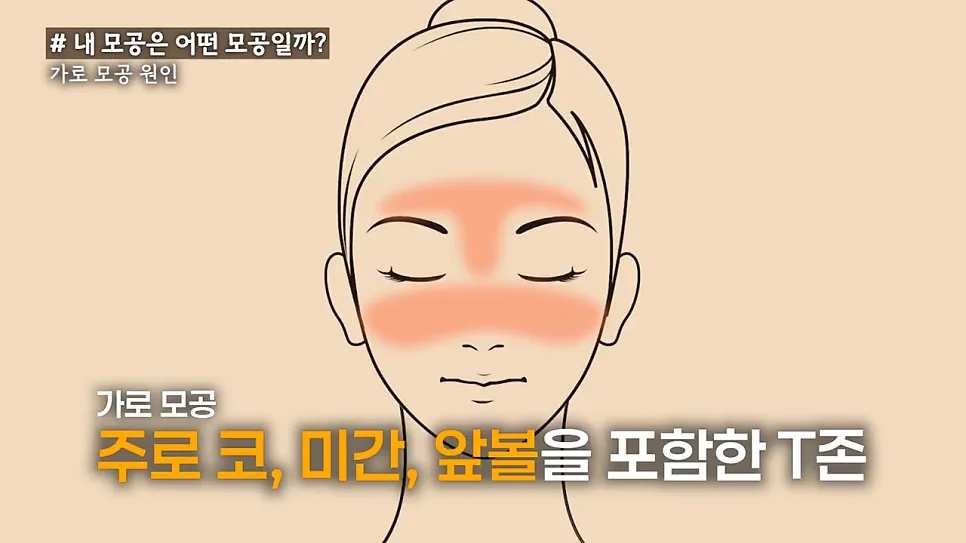
They show up as round openings in the T-zone, on the nose, between the brows and on the front of the cheeks, often with blackheads or whiteheads. If you say things like "my face gets oily fast," "I get a lot of blackheads and whiteheads" or "I break out easily," you almost certainly fall into this group. When excess oil can't drain out and keeps building up, the pore is physically stretched a little at a time.
So with round pores from excess oil, the key is to clear out clogged pores and bring oil production back to normal. Two ingredients help with this.

The first is BHA. Unlike physical exfoliation, where you scrub with salt or sugar granules, BHA dissolves oil and dead skin chemically. It doesn't just tidy up the surface. It penetrates into the pore to dissolve oil. Because it's oil-soluble, it can break down sebum that has hardened in the pore.
The texture is usually thin like a toner, so instead of rubbing it in, pat it in gently with your fingertips. Use it once or twice a week for more than a month, and you should notice the tightly packed plugs of oil and dead skin that were holding your pores open gradually dissolving.
The second ingredient for round pores is retinol. It's so powerful that people joke it could "put dermatologists out of business," and it's one of the top active ingredients in skincare. Retinol penetrates down to the dermis and helps your skin make more collagen and elastin.
Loss of firmness and declining collagen are major reasons pores enlarge. Retinol boosts collagen production to tighten the skin's structure and help pores stay tighter. It also speeds up cell turnover so dead skin and oil don't build up inside the pore, which reduces the very conditions that clog and stretch pores.
If you have oily skin, make BHA and retinol part of your routine. You're really missing out if you don't.
Elongated Pores Caused by Loss of Firmness

The second type, elongated pores, comes from a loss of firmness. These are the pores that appear as skin ages. They have nothing to do with oil, so you'll see them less in the oily T-zone and more on the drier U-zone, the cheeks and jawline.
Instead of being round, they're oval and stretch downward like a teardrop. If you feel that "my skin looks more hollow and saggy than before" or "my pores look like vertical lines," you likely have elongated pores from lost firmness. It isn't oil. Age and UV exposure break down the collagen and elastin in your skin, the support around each pore weakens, and the pore sags in the direction of gravity.
Sun Protection Comes First for Elongated Pores

In consultations, I'm surprised how many people never miss a lifting treatment but apply sunscreen carelessly or skip it altogether. They say it feels sticky or makes their makeup pill. But that's like pouring water into a bucket with a hole in it.
UV light, especially UVA, is the main thing breaking down the collagen framework in your skin every day. You can work hard to build collagen with treatments, but without sun protection that effort goes to waste. Simply applying sunscreen thoroughly can change how your pores look five or ten years from now.
Final Thoughts
Before anything else, check whether your pores are round or elongated, then start the care that fits that type. It's the first thing I tell everyone who comes to DAYONE Clinic near Gangnam Station for a pore consultation. In the next post, I'll go into the basics of pore care, cleansing and moisturizing, and the treatments that help.
This article is general information about the treatment and does not replace an individual diagnosis or treatment plan. Results and their duration vary from person to person.
Wondering what would suit you?
Whether a treatment suits you, and how to plan it, is best decided with a doctor.