

Do people in their 20s really need preventive lifting? Why thin skin can end up with hollow cheeks, and how to decide whether Thermage is right for you. The deciding factor isn’t your age but your skin condition and how the treatment is planned.

This article is adapted from an interview on Face Design Lab, DAYONE Clinic’s YouTube channel.
Hello from DAYONE Clinic. Have you ever had a treatment and thought, “That was a waste of money” or “I wish I hadn’t done it”? This article is about avoiding that kind of regret, especially when it comes to lifting. The bottom line first: the biggest loss is a treatment that’s cheap but doesn’t suit your skin. Most people in their 20s still have plenty of elasticity, so a standard-dose lifting treatment may not feel like it changed much, and thin skin can end up with hollow cheeks. Planning the treatment with lower intensity and fewer lines can help, and in many cases it isn’t too late to consider lifting from your mid-to-late 30s onward.
Lifting Isn’t Right for Every Age
Let’s start with lifting, the treatment people ask about most. Ultrasound and radiofrequency lifting work well, but they can’t be applied the same way to everyone regardless of age or skin condition. In Gangnam, people say eight or nine out of ten consultations involve questions about lifting. Ultherapy, Shurink and Thermage have become very common treatments.
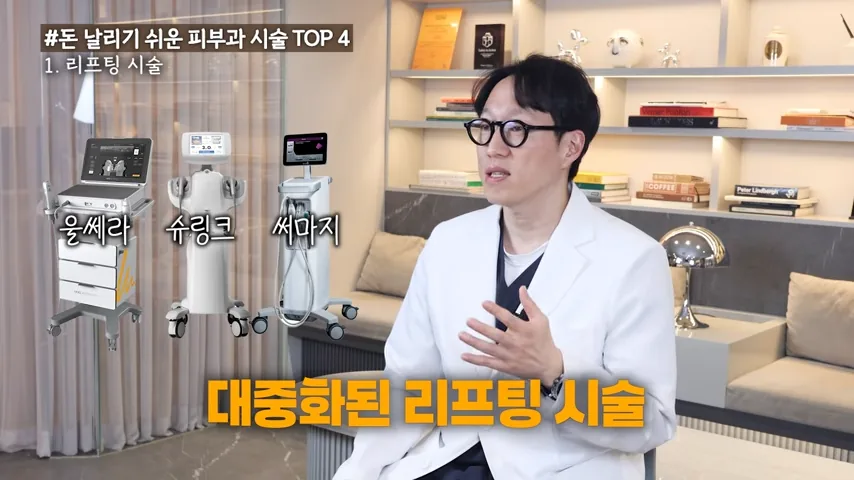
That doesn’t mean these treatments are bad. Far from it. Planned carefully for the right patient, they bring very high satisfaction. The problem is oversimplifying, as in “the younger you get ultrasound lifting, the better, and getting it early prevents aging.”
Preventive Lifting in Your 20s
We get a lot of Ultherapy inquiries from people in their 20s. The question I hear most is, “Wouldn’t it be good to start lifting now as prevention?”
The answer depends on the person. Lifting doesn’t simply pull the skin up; it delivers heat to the tissue beneath the skin, prompting it to contract and regenerate.
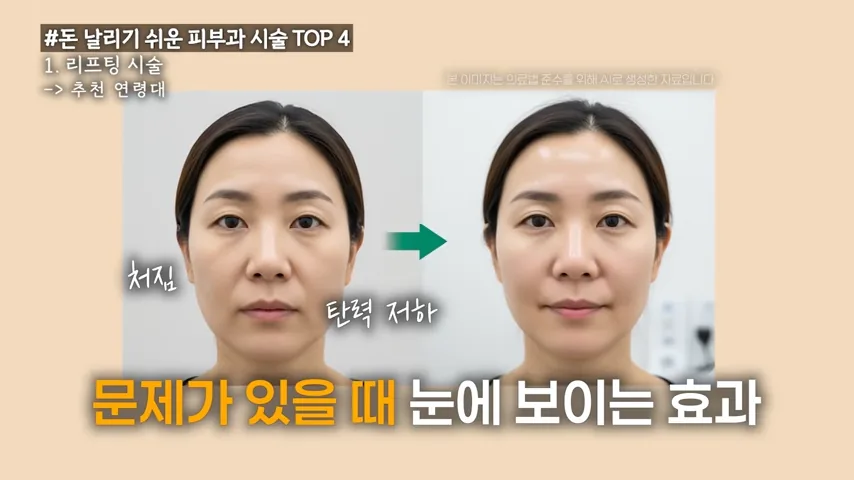
So for lifting to work properly, there needs to be some real loss of elasticity or sagging. In your 20s, you usually still have plenty of elasticity and very little sagging, so using strong energy like Ultherapy or Thermage at the standard dose may leave you feeling it didn’t change much. It’s a bit like someone who’s already slim getting strong weight-loss injections.
Your 20s Don’t Rule It Out
This isn’t to say people in their 20s can never have Ultherapy. With adjusted intensity, fewer lines and only the areas that need it, a carefully planned Ultherapy treatment can still help.
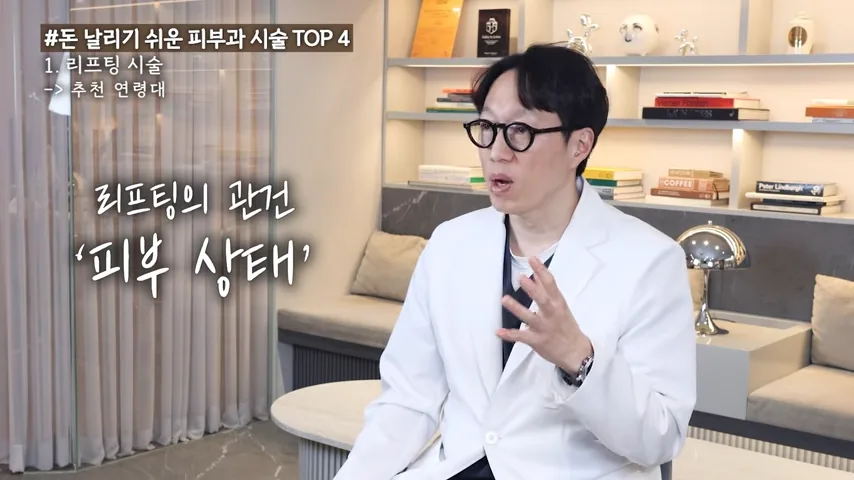
The key is your skin condition and treatment plan, not your age. In many cases it isn’t too late to consider lifting once loss of firmness or sagging starts to show, usually from your mid-to-late 30s. If you’re still in your 20s or have plenty of elasticity, care that protects your skin’s baseline condition, such as sunscreen, moisturizing and barrier care, may be more effective than lifting.
Hollow Cheeks as a Side Effect
On the other hand, if your skin is thin and your face has little fat, using too much energy or too many lines can cause hollow cheeks, whatever your age.
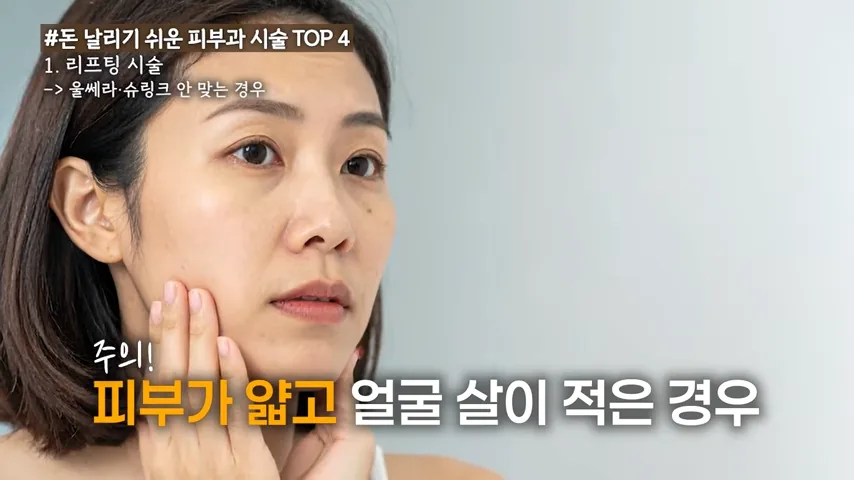
Hollow cheeks happen with treatments like Ultherapy and Shurink, where energy reaches deep layers: as heat travels to the SMAS layer, the subcutaneous fat shrinks. You came in to lift sagging skin, but your face ends up looking sunken, pinched in at the cheeks like a peanut. That’s why the most important thing is deciding when and how much lifting to get based on your own skin and face, not because it’s famous or because everyone’s doing it.
Can Lost Fat Come Back?
Some people ask, “If a treatment has hollowed my cheeks, will the fat fill back in?” It recovers to some extent, but facial fat that has shrunk takes a long time to return naturally. That’s why it’s important to avoid sudden fat loss in the first place.
If your skin is thin and has also lost elasticity, it’s better to avoid Ultherapy or Shurink. If you decide to go ahead anyway, it should be at a very low intensity, with few lines, only in the areas that truly need it.
Thermage for Thin Skin
The thinner your skin, the better Thermage may suit you compared with Ultherapy or Shurink.
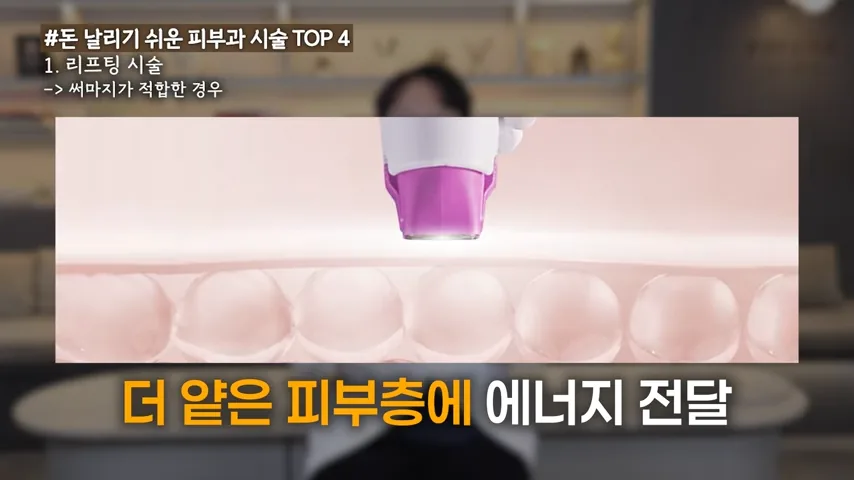
Thermage delivers energy to relatively shallower layers than Ultherapy, so side effects like hollow cheeks are comparatively less likely. Still, Thermage isn’t something every skin can have without conditions. If your face flushes easily with heat or you get recurring breakouts, the decision needs more care.
Radiofrequency treatments work by delivering heat into the skin to trigger a firming response, so depending on your skin condition, oil production may temporarily increase or your skin may become sensitive. In that case, rather than going straight to lifting, it’s much safer to calm the inflammation and settle your skin first, then decide on treatment with adjusted energy levels and pulses.
Before Thermage or any other lifting treatment, I recommend checking first whether your skin is currently in a state to handle this heat.
Final Thoughts
When choosing a lifting treatment, remember that the standard is your skin condition, not your age. In the next article, I’ll cover filler and pore treatments in detail. If you have any questions, feel free to ask us at DAYONE Clinic near Gangnam Station.
This article is general information about the treatment and does not replace an individual diagnosis or treatment plan. Results and their duration vary from person to person.
Wondering what would suit you?
Whether a treatment suits you, and how to plan it, is best decided with a doctor.