

If Ultherapy or another lifting treatment faded after three months, the facial muscles supporting the SMAS may have been weak or out of balance when you had it. Here's how to check for tight and weakened muscles in the mirror, and why muscle balance should come first.

This article is adapted from an interview on DAYONE Clinic's YouTube channel, Face Design Lab.
Hello from DAYONE Clinic. “My mother finally went for Ultherapy last summer, but it only seemed to last about three months. I'd heard Ultherapy lasts around a year, so why did it wear off so quickly?” We hear this question often at DAYONE Clinic near Gangnam Station, because how long results last is what people considering a lift want to know most. The cause is usually that the lift was done while the facial muscles were weak or out of balance.
To be honest, it means she had Ultherapy before she was ready for it. The underlying cause needed attention first, but the visible symptom was treated instead. In this article, we'll show you how to make lifting results last much longer.
Lifting the SMAS Alone Isn't Enough
If you've had a lifting consultation, you've probably heard of the SMAS. This layer, deep inside the face, is what Ultherapy targets.
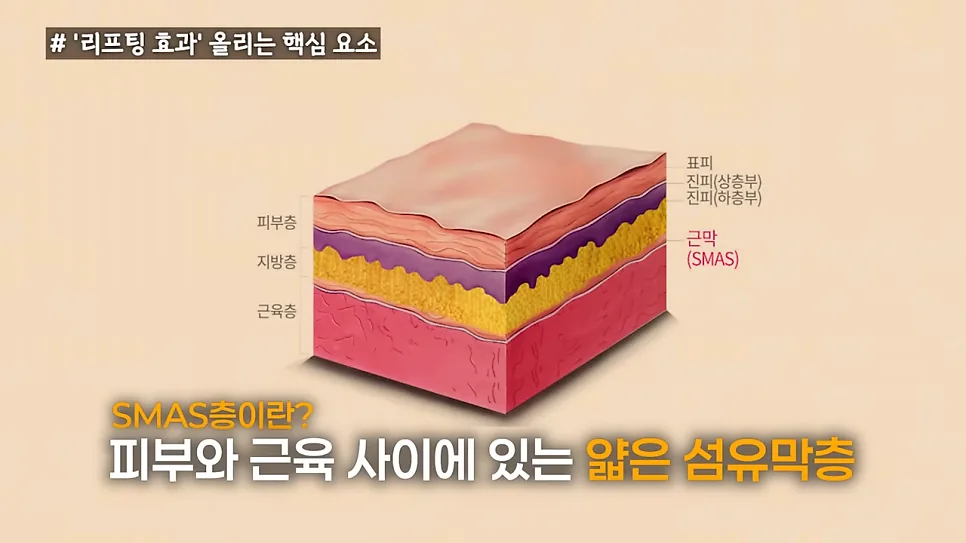
The SMAS is a thin fibrous layer that sits between the skin and the muscles. Put simply, think of it as double-sided tape that holds the skin onto the muscle.
So what happens if the surface the tape is stuck to, the muscle, has gone slack and dropped? However well the tape holds, it won't help if the base underneath gives way. That's why, even if Ultherapy pulls the skin up firmly, the results can't hold for long when the muscles are weak.
You Can't Have a Costly Treatment Every Six Months
If you need a lift every six months instead of once a year, or every three months in severe cases, just to maintain your face, it's neither efficient nor affordable. That's why, when a hands-on exam shows the muscles have already weakened a lot or are badly out of balance, we don't recommend an expensive lift from the start.

We tell patients that the muscles, the foundation, need to be strong and well aligned first so that any treatment added on top can do its job.
Facial Muscles Change in Two Ways with Age
First, let's look at exactly how muscles change with age. The face has about 43 muscles, and as we age, they tend to go in one of two directions.
Some become thick and short from overuse (overactive muscles), while others become thin and slack from underuse (weakened muscles). When the two mix, some areas wrinkle while others sag or hollow out. Take a look in the mirror to see whether your face shows these changes.
Checking for Overactive Muscles
Start with overactive muscles. Look in the mirror and clench your back teeth firmly.

If both sides of your jaw bulge out, the masseter has grown from heavy use. An enlarged masseter can make the jaw look square and heavy regardless of your bone shape.
The temples hold a muscle called the temporalis. Cup your temples with your palms and close your mouth firmly. Some people will feel the sides of the head ripple and bulge.
People often say stress gives them a headache. That's because the temporalis tenses up. When this muscle shortens and knots up, it can press the outer corners of the eyes and the brows downward, making the eyes look smaller and droopier over time. If deep lines form when you frown or furrow your forehead, that's also a sign the muscles there have been contracting too much again and again.
Checking for Weakened Muscles
Next are muscles that have lost strength. In some people, the front of the cheeks or the cheekbone area looks flat when the face is at rest. Others try to lift the corners of the mouth, but the cheeks don't rise with them and only the area around the mouth tenses. Both mean the elevator muscles that should hold the face up against gravity have weakened and stretched.

When the foundation drops, the fat on top slides down, creating jowls and deepening the nasolabial folds.
Summary
In short, relaxing tight muscles and strengthening weak ones to restore balance is the starting point and the most important part of improvement. If you're considering a lift, check what condition your facial muscles are in before rushing into an expensive treatment.
In the next article, we'll go into specific ways to balance the facial muscles. If you have any questions, feel free to contact us.
This article is general information about the treatment and does not replace an individual diagnosis or treatment plan. Results and their duration vary from person to person.
Wondering what would suit you?
Whether a treatment suits you, and how to plan it, is best decided with a doctor.