

Both use heat, but RF lifting works mainly in the dermis, while ultrasound reaches down to the supporting fascia (SMAS). The right one depends on where you sag.

Hello from DAYONE Clinic. Maybe every time you look in the mirror your cheeks seem to sit a little lower, or the lines around your mouth look different when you smile. Your face can look wider in photos, or your contours just won't look defined even with makeup.
Once you notice these changes and start looking into lifting, the first two terms you'll come across are radiofrequency (RF) and ultrasound. Both are described as using heat, so it's hard to tell what actually sets them apart. Reviews don't help much either: some say RF is better, others swear by ultrasound. Rather than picking a winner, let's look at how the two differ and how we decide which way to go.
Why Does the Face Sag?
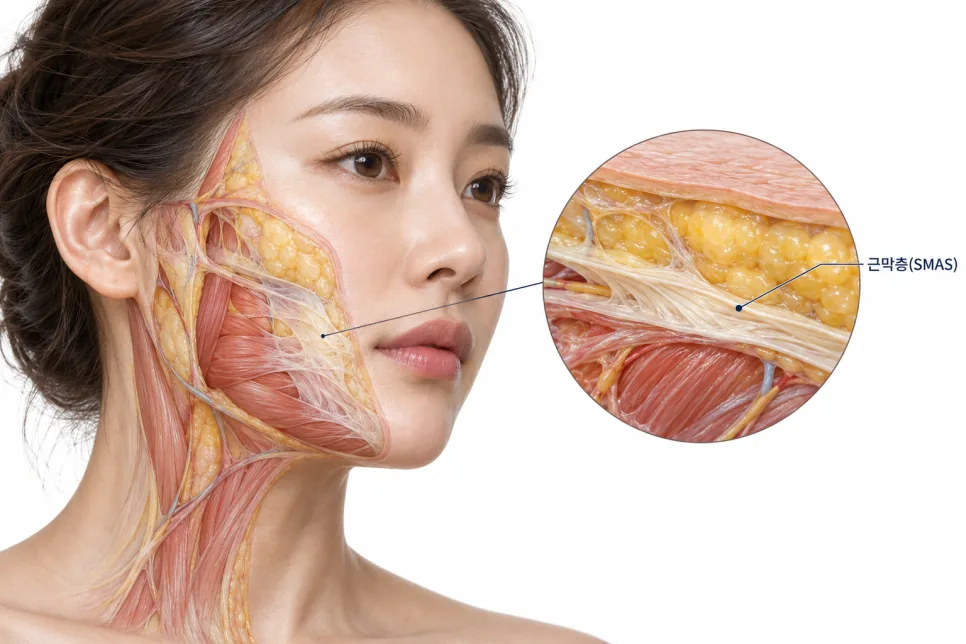
There's no single reason a face starts to sag. The one most people think of first is the dermis losing firmness as collagen and elastin decline. With age, the skin gets less able to build and keep its own firmness, and sun exposure and lifestyle can speed that up.
On top of that, the fascia layer (SMAS) that supports the face beneath the skin can lose some of its strength. Because this layer holds the framework of the whole face, a change in its support can shift the cheeks, jawline and the area around the mouth all at once. Add fat around the cheeks and jaw moving downward, and two people of the same age can sag in quite different ways.
So some people first notice their skin and contours loosening overall, while others notice one particular area dropping. That difference is the starting point for deciding what kind of energy to deliver, and how deep.
How Does Heat-Based Lifting Work?
RF and ultrasound work differently, but the basic idea is the same: deliver heat into the skin so the tissue responds on its own. When heat reaches an area, the tissue there contracts temporarily, and as it recovers, new collagen can be expected to form. That's why it's better to think of results as settling in gradually over time rather than being complete right after treatment.
The real difference between the two lies in how they generate that heat and how deep in the skin they deliver it. That shapes what each one is used for, how it feels and which concerns it suits.
How Does RF Lifting Work?

RF lifting uses radiofrequency energy to deliver heat into the skin, working mainly in the dermis. It's often considered for concerns tied to the condition of the skin itself, such as firmness, texture and a general loosening of contours. Because results develop gradually after treatment, it tends to appeal to people who want a natural refinement rather than a dramatic change.
RF devices include Thermage, Tune Face and InMode, and even within RF they differ in how they deliver energy and which areas they treat. The device name alone doesn't decide the plan, though. The approach can change with your skin thickness, how much firmness you've lost and the result you want.
You may feel warmth or heat during treatment, and how it feels varies by person and area. Most people get back to their day fairly easily afterward, but temporary redness or warmth can occur, so keep your skin calm and comfortable on the day of treatment.
How Is Ultrasound Lifting Different?
Ultrasound lifting focuses ultrasound energy on a single point to deliver heat to deeper layers beneath the skin. What sets it apart from RF most is that the energy reaches below the dermis, down to the fascia layer that supports the face. So people tend to ask about it when structural changes bother them, like the face settling downward or sagging concentrated in one area, rather than surface texture.
Ultrasound devices include Ultherapy, Shurink Universe and Liftera, each with its own way of delivering energy and its own settings. Because the energy reaches deeper layers, the areas, depth and amount of energy need to be decided with extra care. Doing more in one session doesn't automatically mean a better result. What matters is adjusting each area to your facial structure and fat distribution.
You may feel a zapping or heavy sensation during treatment, and some temporary swelling or tingling can linger afterward. Results usually appear gradually rather than right away, so instead of judging after a single session, it's important to follow your progress together with your doctor.
RF or Ultrasound: Which Is Better?
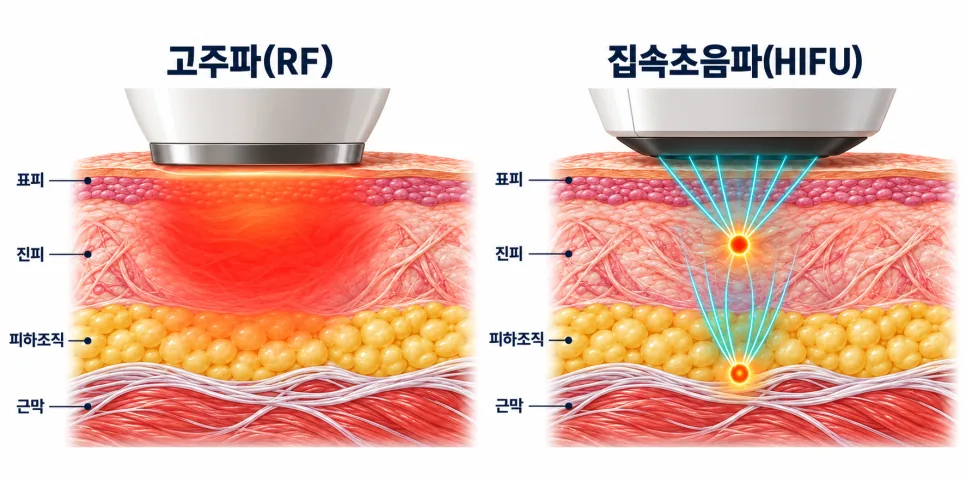
Neither one is simply better. Someone whose dermal firmness and skin texture have declined overall may need a different approach from someone whose sagging is concentrated in particular areas. It's easier to think of them not as substitutes but as options that treat different layers.
How much fullness your face has also changes the approach. If your skin is thin and your cheeks are lean, even the same energy calls for extra care so the cheeks don't end up hollow or sunken. If your face is fuller and the sagging has moved lower, the plan centers on where it has dropped. What fits the thickness and structure of your face matters more than which method is famous.
How Do Concerns Change with Age?
In your 20s to 40s, sagging often isn't obvious yet, but many people feel their skin isn't as firm, their face looks wider in photos or their features look less defined. At this stage, rather than making big changes, the focus is on maintaining your current firmness while bringing out a clear, natural look that suits your face. A light approach to looking after your skin and its firmness is often the right fit.
From your 50s, structural changes tend to appear together: sagging cheeks and jawline, changes around the nasolabial folds and mouth, and a sense that the whole face is moving down. Here the goal isn't to look younger at any cost but a natural refinement that doesn't take away from the way you look now. Because the changes have happened across several layers of the skin, we look at several options together rather than a single method.
Can RF and Ultrasound Be Combined?

Sometimes, yes. When loss of dermal firmness, rougher texture and weaker support in the deeper layers are all noticeable together, one method alone may not be enough, and we may consider both, in a planned order with time in between.
Doing both doesn't mean doing more or going harder, though. What matters more is choosing only the areas that need it, setting the order, and allowing time between treatments for your skin to recover and for the results to be checked. The order and spacing depend on your skin condition, how much sagging you have and what treatments you've had before, so they need to be planned for each person.
Common Misconceptions About Lifting
The most common misconception is that the more energy you put in, and the stronger it is, the better the result. In lifting, what matters isn't how hard it's done but whether the right amount reaches the right depth and areas for your facial structure. Going too strong can actually lead to hollow cheeks or an unnatural look, so it needs careful judgment.
Another is that a famous device gives everyone similar results. Even with the same device, results can vary with facial structure, skin thickness, the way you sag and how the doctor adjusts the settings for each area. So rather than comparing device names, start with a consultation where a doctor looks at your face and explains what's going on.
The Bottom Line
RF and ultrasound both use heat, but they reach different depths and work in different ways, so they may suit different concerns. Rather than choosing one first, start by finding out which layer your sagging is coming from. Looking softer and younger while still looking like yourself doesn't start with finding the strongest treatment. It starts with finding what your face needs right now.
If you're torn between RF and ultrasound, book a consultation with one of our doctors at DAYONE Clinic near Gangnam Station and find the right approach for you first.

This article is general information about the treatment and does not replace an individual diagnosis or treatment plan. Results and their duration vary from person to person.
Wondering what would suit you?
Whether a treatment suits you, and how to plan it, is best decided with a doctor.