

Washing with hot water or over-exfoliating breaks down the layer that protects your skin, and when you moisturize matters more than how much you apply: right after cleansing. We also look at how cutting back on salty food and sugar affects puffiness and sagging.

This post is adapted from an interview on DAYONE Clinic's YouTube channel, Face Design Lab.
Hello from DAYONE Clinic. In the last post, I covered sleeping position and expression habits. This time, I'll talk in detail about the basics of skin care (cleansing and moisturizing) and eating habits. Washing with hot water strips away even the oil film that protects your skin, which breaks down the barrier and leaves skin prone to dryness. With moisturizer, applying it right after cleansing matters more than how much you use.
Habit 3: Cleansing and Moisturizing
The third habit is cleansing and moisturizing. Surprisingly, people who overdo it are sometimes at greater risk than people who neglect it. I'm often asked, “Lots of people put real effort into washing because they hear cleansing is the most important step. Why is that a problem?”
A classic example is washing with hot water. Many people deliberately use hot water because they believe warm water opens the pores and draws out impurities better, but that's only half true.
The Problem With Hot Water
Hot water does open the pores, but it also dissolves and washes away all the oil on the surface of your skin. That oil is the natural protective layer your skin makes for itself. In effect, you're stripping that layer off every morning and night.
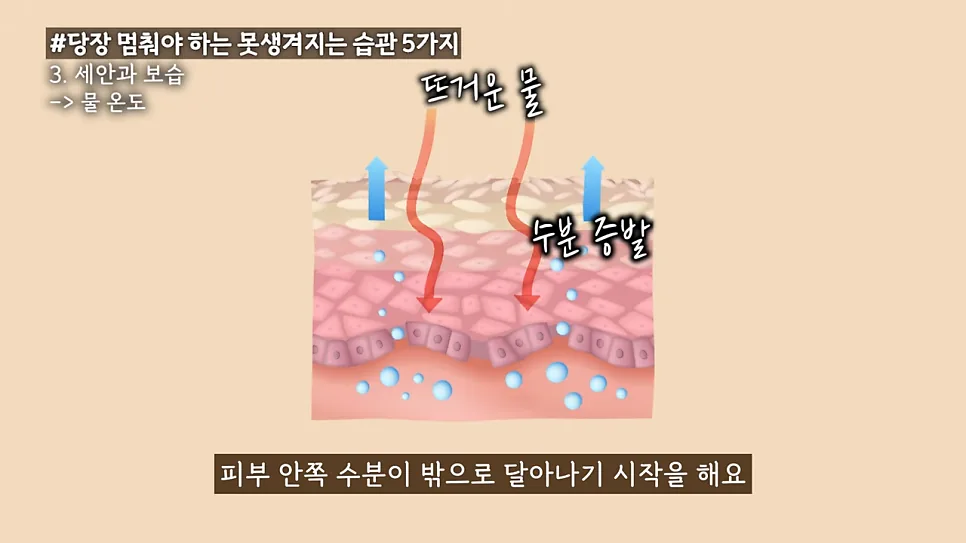
Once that layer is gone, moisture starts escaping from the skin. As moisture drops, the skin shrinks and fine lines form around the eyes and mouth. Once or twice, the skin recovers quickly, but repeat it every day and your skin settles into a constantly dry state. So wash your face with lukewarm water. The safest temperature is one that feels neither hot nor cold on the back of your hand.
The Risks of Over-Exfoliating
Over-exfoliating causes problems too. Many people think of dead skin cells as dirt, but they're actually like the bricks that make up the wall protecting your skin. Removing them too often and too hard is like knocking down that wall, leaving your skin fully exposed to outside irritants. Skin turns red and sensitive, and over time it even loses firmness.

Once a week is plenty for scrubs, and if your skin is sensitive, once every two weeks is fine.
Moisturizer Timing Matters
When people ask, “So what's the right way to moisturize?” I tell them that when you apply it matters more than how much you apply.

Apply moisturizer right after cleansing, while your skin is still damp. As time passes, moisture evaporates from the skin's surface first, which actually leaves it drier.
The order you apply products in is very important too. Usually you go from the thinnest texture to the thickest, but if your skin is sensitive, applying a thin layer of moisturizer first and then your active products on top causes less irritation and helps them absorb well. This method is sometimes called buffering.
Habit 4: Eating Habits
The fourth habit that damages the face is what you eat. This may be a little uncomfortable to hear, but after seeing so many people in clinic, I can often roughly guess what they ate the night before, especially when it was something salty.

After ramen, soups and stews, or a late-night snack like fried chicken, your face is puffy the next morning, right? Sodium makes your body hold on to water, so fluid builds up in your face.
Swelling once and going back down is fine. But if it happens every day, your skin starts to remember the stretched state as its normal shape. Its elasticity no longer springs back.
The Risks of Sugar
Some people ask, “What about sweet foods? Are they okay?”

Over the long term, sugar can actually be even more harmful. When you take in too much sugar, sugar molecules circulating in your blood stick to collagen. Collagen is normally very flexible, but when sugar binds to it, it stiffens. This is called glycation, and it's why people who eat a lot of sweet food can see their cheeks sag more and their jawline lose definition faster than others the same age.
What Changes When You Change Your Diet
When people ask, “Can changing what I eat really change my face?” I tell them it definitely can.

Simply cutting back on salty food after dinner noticeably reduces morning puffiness. For sugar, start by cutting down on processed foods such as soft drinks and bread. Eating plenty of vegetables and fruit rich in antioxidants instead helps slow glycation.
It's also good to drink about 1.5 liters of water a day, consistently. When your body is well hydrated, waste is cleared more easily and circulation in the skin improves.
Summary
Remember these skin care essentials: wash with lukewarm water, exfoliate once every one to two weeks, moisturize right after cleansing, and cut back on salty food in the evening and on sugar. In the next post, I'll talk about UV and wrap up everything we've covered. If you have any other questions, feel free to contact DAYONE Clinic at Gangnam Station.
This article is general information about the treatment and does not replace an individual diagnosis or treatment plan. Results and their duration vary from person to person.
Wondering what would suit you?
Whether a treatment suits you, and how to plan it, is best decided with a doctor.