

Under-eye bags come from four causes: natural structure, aging, everyday habits and physical irritation. Plus why unproven massage can make them worse.

This article is adapted from an interview on Face Design Lab, DAYONE Clinic's YouTube channel.
Hello from DAYONE Clinic. Have you ever looked in the mirror, noticed your under-eyes and smoothed the skin upward with a finger? Or maybe you've tried one of the eye exercises shown on YouTube.
Let's be honest, though. Almost none of the under-eye massages and eye exercises out there have been proven to work. They can even do harm. The skin around the eyes is the thinnest on your face, and when you keep rubbing and tapping it, collagen gets damaged and pigmentation sets in, which ends up making the under-eyes darker and saggier.

Under-eye bags and sagging come down to four causes: the structure you're born with, aging, everyday habits, and physical irritation. At DAYONE Clinic at Gangnam Station, where we've treated under-eye sagging for many years, the question we hear most is "Why do my under-eyes sag?" Here's a clear look at the causes, because knowing the cause is how you find the right fix.
It's Not Just One Cause
When we talk with patients in the clinic, a lot of them have no idea why their under-eyes started to sag. They just assume it's age. In fact, under-eye sagging has four main causes. Let's go through them one at a time.

Cause 1: Your Natural Structure
The structure around the eyes is different from person to person, right from birth. There is fat beneath the eyes, held back like a dam by a membrane called the orbital septum.
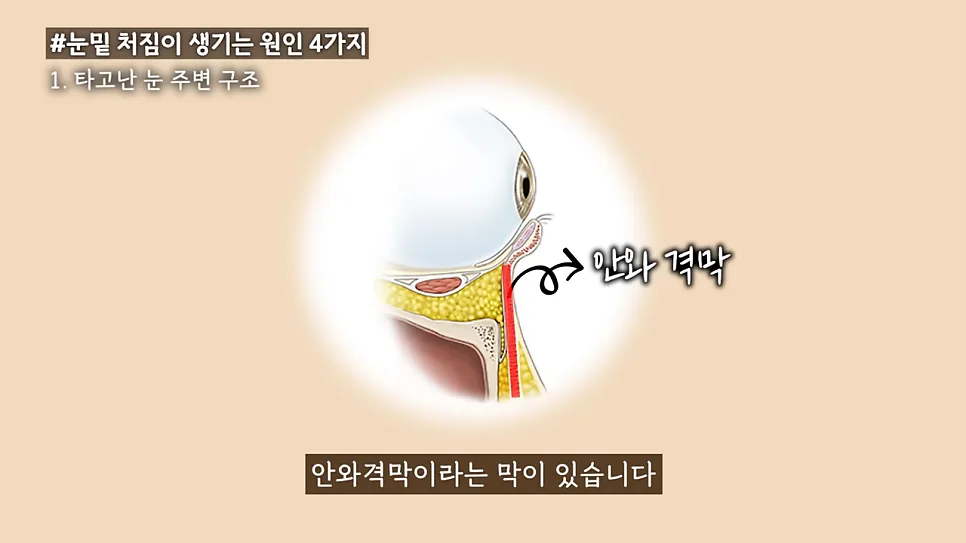
When this membrane is strong, the fat stays in place. But some people are born with a weaker structure here, or simply have more under-eye fat. If one of your parents had pronounced under-eye bags, there's a good chance you will too. It's a genetic factor.
That's why some people in their 20s already have puffy under-eyes or shadows. In those cases, it's worth considering that the cause may be structural rather than aging.
Cause 2: Aging
This is the most fundamental cause, and the one no one can avoid. Two things happen at once as you get older. First, the skin itself gets thinner and loses elasticity, because the collagen and elastin that keep it firm steadily decline.
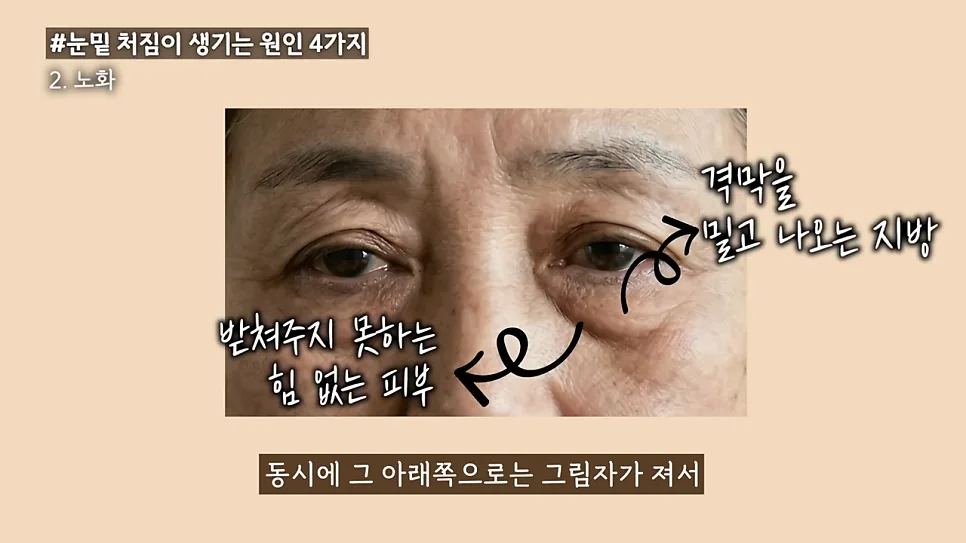
On top of that, the orbital septum that held the fat back weakens too, and the fat starts to push forward. Meanwhile, the skin has lost the strength to support it. The result is a bulge under the eye with a hollow, shadowed area just below it.
Cause 3: Everyday Habits
This one really matters, because many people are speeding up under-eye sagging without realizing it. The most common culprits are lack of sleep and frequent drinking.

Poor sleep or regular drinking makes the blood vessels under the eyes dilate, which causes swelling. Puffiness once or twice is fine. The problem is when it keeps happening. What happens to a balloon you blow up and let down again and again?

It stretches and doesn't go back. The skin under your eyes is the same. When it swells and settles over and over, that thin skin stretches permanently and starts to sag.
Add to that a salty diet, sleeping on your stomach or side, and smoking. All of these habits bring under-eye sagging on sooner.
Cause 4: Physical Irritation
The skin around the eyes is the thinnest and most sensitive on the face.

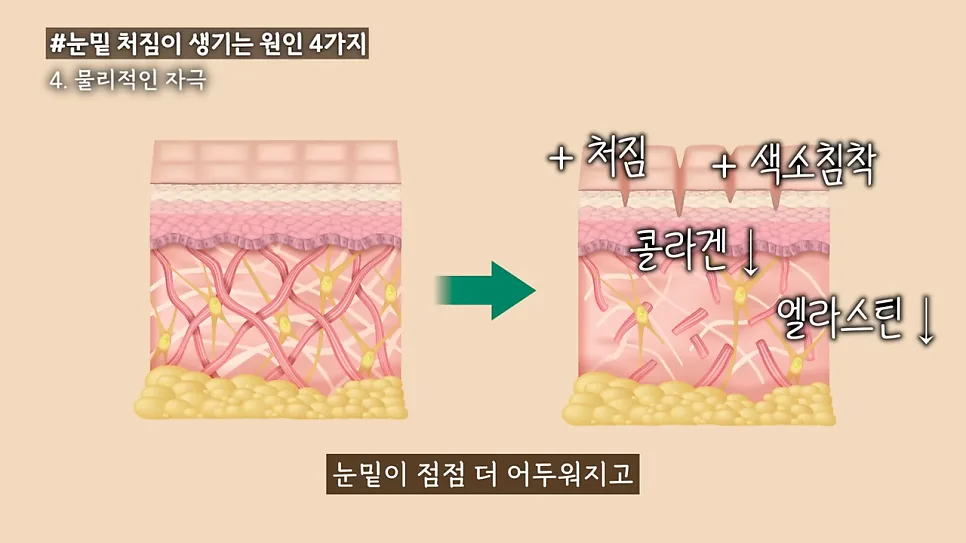
Yet a lot of people touch it all the time. If you have allergic rhinitis or eczema, itchiness can have you rubbing your eyes often. Scrubbing hard with cleanser when you take off makeup does the same.
Rubbing the skin around your eyes is like folding and unfolding a thin sheet of foil again and again. Collagen and elastin get damaged, pigmentation develops, and the under-eyes are bound to sag more and more.
The Takeaway
So under-eye sagging isn't simply a matter of age. In many cases, several causes work together: your natural structure, aging, habits and physical irritation. Take a moment to check whether any of these four apply to you.
In the next article, we'll walk through how to manage under-eye puffiness at home, including a lymphatic massage routine, so be sure to read that one too. If you have any questions, feel free to get in touch anytime.
This article is general information about the treatment and does not replace an individual diagnosis or treatment plan. Results and their duration vary from person to person.
Wondering what would suit you?
Whether a treatment suits you, and how to plan it, is best decided with a doctor.