

Eye creams aren't very different in ingredients from moisturizing and repair creams for the face, and using a very oily cream or retinol the wrong way around the eyes can lead to milia, contact dermatitis or meibomian gland damage. Light moisturizing and lymphatic drainage massage to control puffiness do more to prevent under-eye sagging than expensive eye cream.

This article is adapted from an interview on DAYONE Clinic's YouTube channel, Face Design Lab.
Hello from DAYONE Clinic. For the eye area, proper moisturizing and puffiness control come before expensive eye cream. “That's exactly my problem. No matter how much eye cream I use, nothing changes.” We hear this all the time, and honestly, it's no surprise.
Many people believe eye cream is the answer, but applied the wrong way, it can actually harm the skin around your eyes. In this article, we'll clear up common misconceptions about eye care and go step by step through effective things you can do at home.
You Don't Need a Separate Eye Cream
When people think about caring for the eye area, eye cream is usually the first thing that comes to mind.

The cosmetics industry won't like hearing this, but you don't really need to buy a separate eye cream. Compare the full ingredient lists, and they're hardly different from nourishing creams or rich repair creams for the whole face. Because the eye area has very few oil glands and is very dry, most eye creams simply add a bit more oil for a thicker texture. So if you already have a gentle moisturizer or repair cream that strengthens the skin barrier, applying an extra careful layer around your eyes is enough.
When Expensive Eye Cream Does More Harm
It's common for skin to get worse after generously applying a pricey, high-performance, rich eye cream. The skin around the eyes is very thin, and the openings that let secretions out are tiny. A thick layer of very oily cream can clog pores and trap keratin inside, which can lead to milia around the eyes.
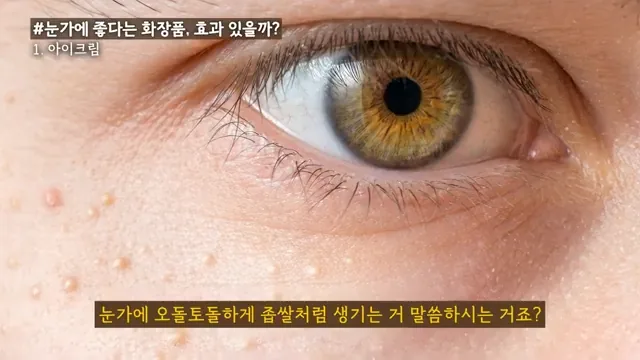
People ask back, “You mean those tiny white bumps around the eyes?” Exactly. But unlike whiteheads, milia won't come out if you squeeze them.
Once milia grow, you'll eventually need to come in and have them removed with a laser, so overdoing oily creams around the eyes isn't a good idea. Thinking of it as applying a light moisturizer in several thin layers is much safer and more effective for the eye area.
Precautions for Using Retinol Around the Eyes
“What about retinol? I hear it's good for fine lines and firmness. Can I use it around my eyes?” We're asked this often too. Depending on how you apply it, it can work well or do a lot of harm to the skin around your eyes. Retinol is among the most effective active cosmetic ingredients known so far, and a great many studies show it helps with fine lines and firmness.
The downside is that because it's so effective, it's also irritating. Even on the cheeks, where skin is relatively thick, about one in three patients easily gets red and irritated. Apply it generously to the already thin, dry eye area, and the chances of more dryness, redness and flaking go up sharply. That's contact dermatitis.

If contact dermatitis lasts a long time, aging can actually speed up, the skin thins and you can end up with many more wrinkles.
Risk of Damaging the Meibomian Glands
So if you want to use retinol, choose a low-strength product and apply a very thin, small amount. Lower-strength retinol creams made specifically for the eye area are now available, and these are a bit safer. But if you're not confident about controlling the amount, or your skin is naturally thin and sensitive, we don't recommend it. For you, retinol has more to lose than to gain.

Along the upper and lower edges of the eyelids are very important structures called the meibomian glands. They release the oils that form the lipid layer of the tear film, which coats the surface of the eye and keeps tears from evaporating. That's why your eyes don't dry out even when you keep them open like you are now. If high-strength retinol is absorbed through the skin and reaches the meibomian glands, it can damage their cells or reduce their function.
This can cause severe dry eye, and because your eyes feel gritty, you end up rubbing them without realizing it. That friction can deepen wrinkles around the eyes and even cause pigmentation. In trying to get rid of one wrinkle, you could harm your eye health and gain two or three more. I don't think there's any reason to take that risk by forcing retinol onto the eye area.
Why Managing Puffiness Matters
Some people ask, “So is there nothing I can do at home besides moisturizing carefully?” Moisturizing is far more important than you'd think, and there are other methods that cost less than cosmetics and work well.

A key one is managing puffiness. Under-eye puffiness is one of the main causes of under-eye sagging. Picture your eyes all swollen in the morning. It may seem like just water buildup, but in fact the skin and the tissue beneath it have absorbed fluid and swelled up.
The problem is that the more this cycle repeats, swelling in the morning, going down in the afternoon and swelling again the next morning, the thinner and more stretched the skin becomes. Just as a rubber balloon gets looser and weaker after being blown up and let down many times, the skin around the eyes loses elasticity and starts to sag.
The under-eye area has the thinnest skin on the face, so it's especially vulnerable to this repeated swelling. That's why, in eye care, controlling puffiness can be the same as preventing under-eye sagging.
How to Do Lymphatic Drainage Massage
What I recommend is lymphatic drainage massage. Most under-eye puffiness comes from lymphatic congestion, meaning fluid and waste that can't drain away and pool. Simply opening up the path for lymph to flow can noticeably reduce morning puffiness and prevent the skin from stretching from repeated swelling.
Here's a simple massage. Before you start, wash your hands thoroughly, and since bare hands can irritate the skin, be sure to apply lotion or cream to your face or hands first.
Method one: gently pull one ear and press softly under the eye with your thumb. Lymph passes in front of and behind the ears and drains down into the neck. It helps to think of it as a kind of drainage system.

Imagine water pooling under your eye, press gently with your finger for three seconds and then sweep sideways. Repeat about 10 times. Even people with allergic rhinitis tend to find it refreshing.
Method two: you can use two fingers or a roller. Start beside the nostrils and, pressing gently, glide up toward the temples. Repeat this 3–5 times as well.
Then come down in front of the ears and into the neck. The neck has a muscle called the sternocleidomastoid. Imagine that the channel lymph flows through runs along it, and gently push fluid pooled in the face downward with your fingers or a roller. Behind the ears is also very important, so press there too, stimulating the sternocleidomastoid with your fingers or a roller in the same way.
Just be sure to keep it gentle. Lymphatic vessels are very soft, delicate tissue, and rubbing hard to drain puffiness faster can damage them.
Daily Habits
Everyday posture and diet matter a lot too. Constant pressure from sleeping on one side, resting your chin in your hand or rubbing your eyes hard makes the face puffy and prone to wrinkles. Eating salty, sweet or spicy foods often will inevitably make you puffy, so watch your salt intake as well.
Summary
The key to the eye care tips from DAYONE Clinic near Gangnam Station is that proper moisturizing and puffiness control matter far more than expensive eye cream. In the next article, we'll go into the types of under-eye sagging and how to check yours. If you have any questions, feel free to contact us.
This article is general information about the treatment and does not replace an individual diagnosis or treatment plan. Results and their duration vary from person to person.
Wondering what would suit you?
Whether a treatment suits you, and how to plan it, is best decided with a doctor.