

A 5-minute daily fascia massage for the ears and neck, masseter, midface, brow area and scalp. It helps prevent sagging; if sagging is advanced, consider treatment.

This article is based on an interview from Face Design Lab, DAYONE Clinic's YouTube channel.
Hello from DAYONE Clinic. Here's a five-step fascia massage you can do at home. All it takes is five minutes a day, done consistently. In our last post we covered the four reasons the face starts to sag; this one is about what you can do about it yourself.
Before You Start
One important point first: fascia massage isn't about rubbing the surface of the skin. The idea is to grip the fascia deep beneath the skin and guide it back into place. Pressing hard on thin skin can irritate it, so apply plenty of face oil or cream before you begin.
The 5-Step Fascia Massage
Step 1: Release the Ears and Neck (Clear the Drain First)
You might wonder why a facial massage starts with the neck. It's because the area around the ears and the neck works as the main drain for puffiness and waste leaving the face.
When this pathway is blocked, fluid pools in the face and makes it puffy, and that extra weight makes the skin sag even more. Tight neck muscles also drag the facial fascia downward.
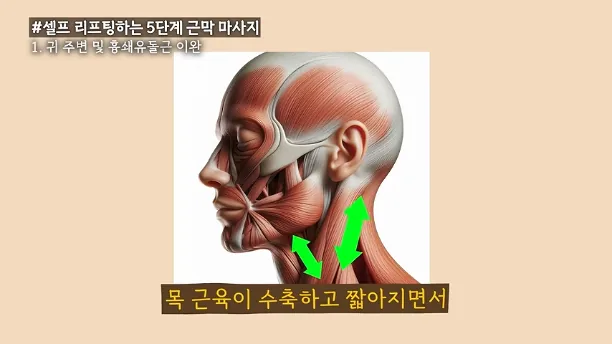
Make a V with your index and middle fingers, slip your ear between them and rub gently up and down. After 10 times, sweep softly down the thick muscle on the side of your neck (the sternocleidomastoid), from behind the ear toward the collarbone. Lymph flows very close to the surface, so light pressure is all you need.
Step 2: Release the Masseter (Jaw Muscle)
The masseter, the muscle behind a square-looking jaw, attaches to the cheekbone above and the jawbone below. Stress or a habit of clenching your teeth makes it tight and knotted, and it pulls the fascia of the cheeks and the whole face downward.
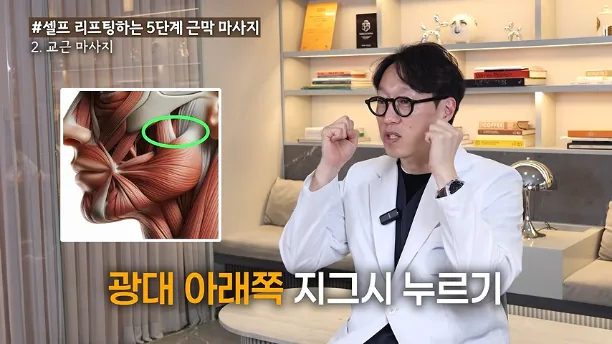
Make a loose fist and work in sections: start just below the cheekbone, move to the middle of the masseter, then down toward the jawbone. You're in the right spot if it feels relieving when you clench your back teeth. A little sore but satisfying means you're doing it right. Just 30 seconds a day can noticeably improve circulation in your face.
Step 3: Midface Massage (For Nasolabial Folds and Drooping Cheeks)
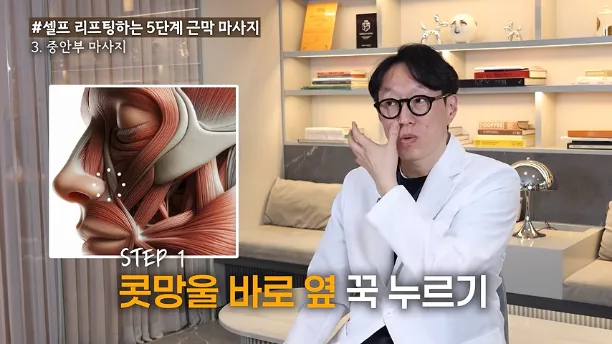
Press firmly with your thumb where the nasolabial fold begins, right beside the nostril. Then sweep upward from the side of the nose along the cheekbone toward the temple. Smooth it out gently, as if you were ironing a creased shirt by hand.
About 30 seconds for both sides together is enough. Done regularly, it helps keep the midface fat pads from bunching downward and helps nasolabial folds look shallower.
Step 4: Relax the Brow Bone and Upper Eyelids
This one is for anyone whose eyelids have started to feel heavy with age, to the point that keeping your eyes open takes effort.
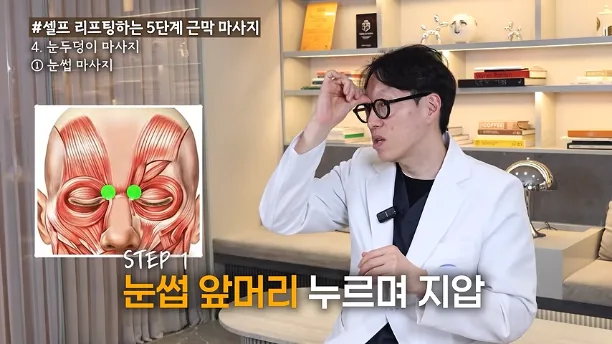
Press firmly into the inner end of each eyebrow with your thumb or index finger, as if you were doing acupressure. Work along the brow bone toward the tail of the brow, gently releasing the fascia as you go. The skin around the eyes is very thin, so don't rub hard. Repeat for 20–30 seconds with a light, relieving touch.
Next, place the heel of your hand in the center of your forehead, press gently and slowly push up toward the hairline. Repeat about 10 times and the eye area can feel much brighter.
Step 5: Scalp Massage (The Finishing Touch)
Your facial skin and your scalp are connected as one continuous layer. So no matter how much you lift the face, if the scalp holding it from behind is stiff, it slides back down quickly.
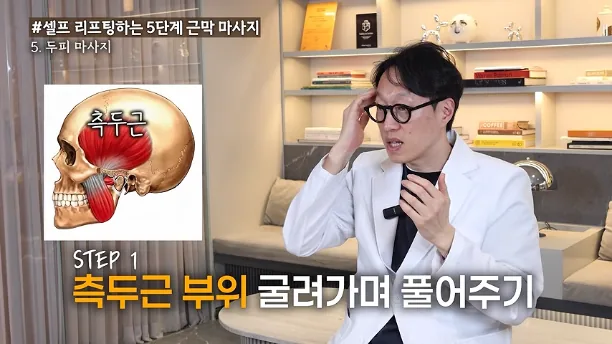
With your fingertips or a fist, press firmly in circles where the hair begins above your temples. Work across the whole scalp, from the crown down to where it meets the back of your neck, pressing to loosen it. Do this for about 30 seconds, as if you were pulling all your hair upward, and you can feel a lifting effect across your whole face.
The Bottom Line
Fascia massage is effective for preventing sagging and maintaining what you have now. Once sagging is well advanced, though, massage alone has its limits. At that point treatment is the fastest and most efficient route, and in our next post we'll go through how to choose a treatment based on your skin. If you have any questions, feel free to get in touch with DAYONE Clinic near Gangnam Station.
This article is general information about the treatment and does not replace an individual diagnosis or treatment plan. Results and their duration vary from person to person.
Wondering what would suit you?
Whether a treatment suits you, and how to plan it, is best decided with a doctor.